
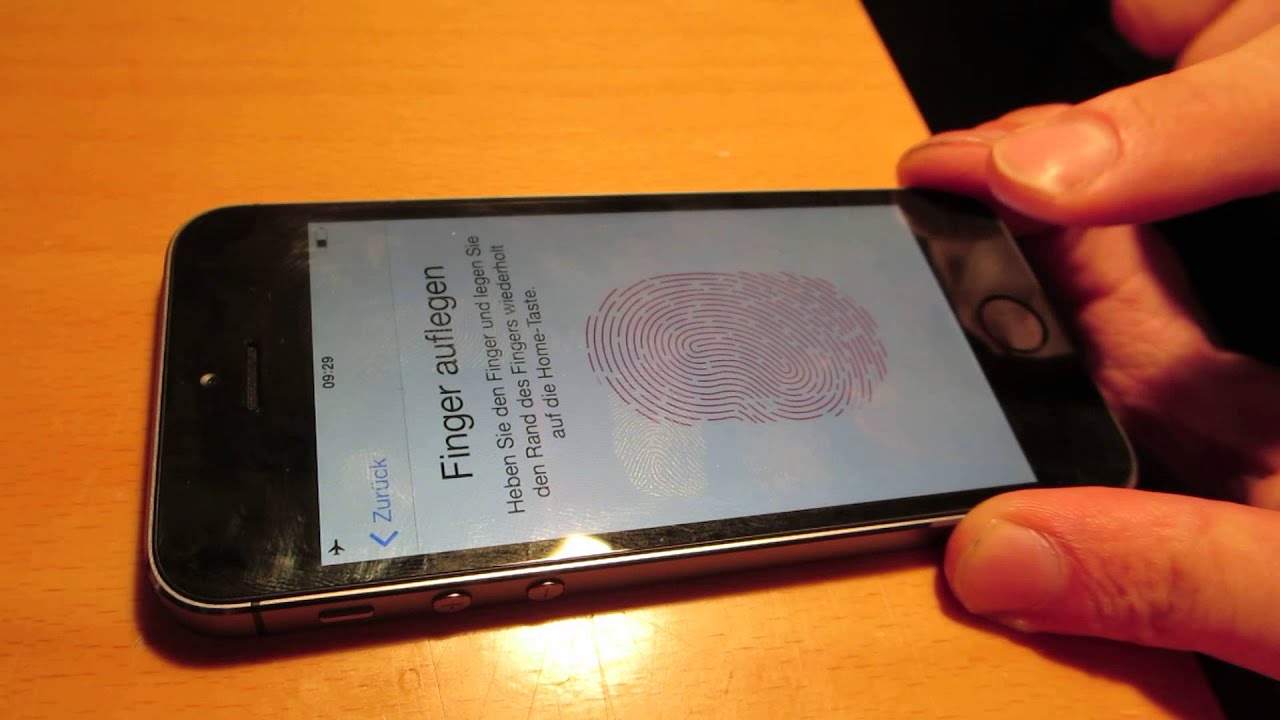
Less than two weeks after Apple touted its new Touch ID fingerprint reader as a "convenient and highly secure way to access your phone," the biometrics team of the European hacking group, the Chaos Computer Club (CCC), has reportedly been able to successfully circumvent the sensor using the "Starbug" approach that was documented by the CCC back in October 2004. So how did they do it?
According to the group's release, this approach involves a number of remarkably simple steps that only require materials that can be found in any household:
- A fingerprint of the enrolled user was photographed with a 2400 dpi resolution.
- The resulting image was cleaned up, inverted and laser printed at 1200 dpi onto a transparent sheet with a thick toner setting.
- Pink latex milk or white wood glue was smeared into the pattern created by the toner onto the transparent sheet.
- After curing, the thin latex sheet was lifted from the transparent sheet, breathed on to make it a bit moist, and placed onto the sensor to unlock the phone.
The group further noted that this process has been used with minor refinements and variations against the vast majority of fingerprint sensors on the market and that the press had been dominated by "bogus speculation about the marvels of the new technology" while in reality, defeating Apple's higher resolution sensor simply required a higher resolution fake.
Article continues belowThe Chaos Computer Club has promised that further details about the hack will be made available at the source link; you can view their demonstration video below.
Follow us @tomshardware, on Facebook and on Google+.