CES 2026 was dominated by AI and its accompanying hype, as evidenced by the keynotes from heavy industry hitters like Nvidia and AMD. But the seemingly insatiable AI-driven demands on the RAM and storage markets also meant that we saw no new GPUs and very few SSD or RAM launches at the show. And laptop and PC makers were very cagey about pricing – although we do know that new models will be more expensive. There was still plenty of innovative and eye-catching tech to be found in Las Vegas this year, even if we had to look in some unexpected places to find it.
Intel’s Panther Lake launch and AMD’s Gorgon Point did give laptop makers a reason to launch new models, and Dell took the opportunity to backtrack on last year’s rebranding, with impressive new XPS laptops. The lack of new GPUs meant that things were a bit boring in the realm of gaming PCs, but Lenovo unrolled some excitement with its expandable Legion Pro concept, and Asus decided RGB wasn’t enough, wrapping its latest prebuilt in hologram-generating fans. Not to be left out, ASRock jumped into the AIO cooling ring with a dual-pump concept with a hologram that hovers over your motherboard.
These are the best 18 products that the editors of Tom's Hardware found at CES 2026. — Matt Safford
Best CPU: Intel Core Ultra Series 3 "Panther Lake"
Intel Core Ultra Series 3 "Panther Lake"
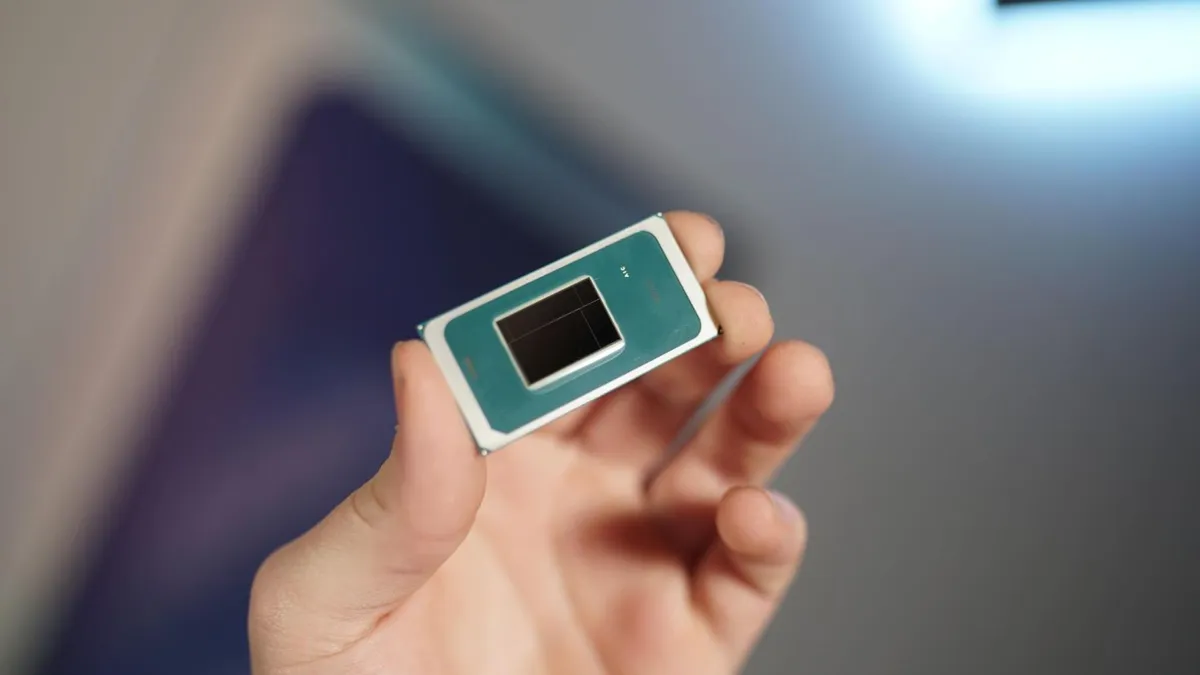
CES 2026 was light on CPU announcements. We heard about Ryzen AI 400 ‘Gorgon Point’ chips, which are just a refresh of the existing Strix Point lineup, and the much-discussed Ryzen 7 9850X3D. Intel finally unveiled Panther Lake, which is a series it has been discussing for the past six months, and for years in the context of its 18A process. Panther Lake wins, but make no mistake; it doesn’t win by default. Even in a year light on CPU announcements, Panther Lake takes the crown not only because of its impressive performance targets, but also because of what it represents for Team Blue.
With the death of 20A on Intel’s road map, 18A has served as the inflection point, the point at which the ambitious manufacturing strategy Intel laid out close to five years ago actually reaches completion. Moreover, it represents the point in which Intel is bringing together the disparate approaches we’ve seen on mobile over the past several generations. It’s designed to be the AI PC enablement of Meteor Lake, the efficiency of Lunar Lake, and the performance of Arrow Lake-H, all wrapped up in a package that boasts a massive iGPU that Intel says can rival entry-level discrete graphics.
Across both desktop and mobile, Intel’s offerings have carried an asterisk for the past few generations. Lunar Lake is the most efficient x86 chip on the market, but it takes a clear backseat in performance. Arrow Lake is remarkable in its productivity performance, considering the efficiency and architectural approach, but it lags in gaming performance. Panther Lake, according to Intel’s claims, carries no asterisk. We’ll have to see if those claims hold up once the chips are available, but if there’s any announcement out of CES that holds some promise for the future, it’s Panther Lake. — Jake Roach
Read more:
🔴 Intel doubles down on gaming with Panther Lake, claims 76% faster gaming performance
🔴 Intel Panther Lake pre-release testing delivers over 80 fps in Cyberpunk, 100 fps in F1
Best GPU: MSI RTX 5090 Lightning Z
MSI RTX 5090 Lightning Z
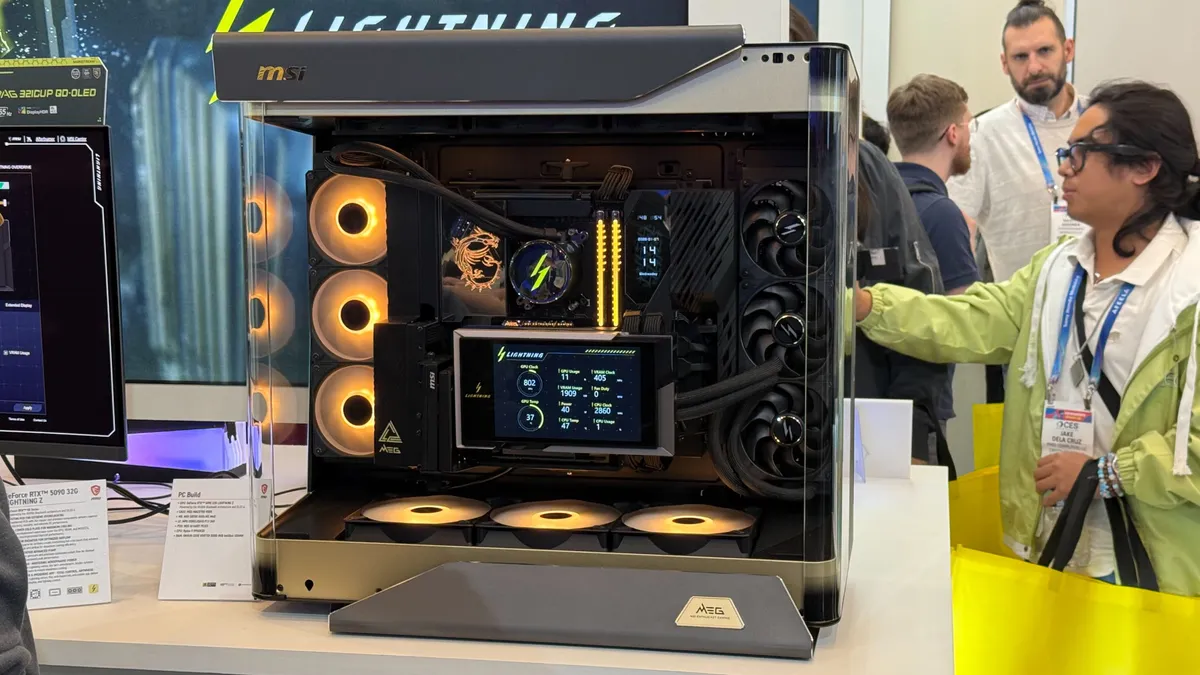

In the midst of a disappointing CES for consumer GPUs, we appreciate that MSI went all-out with one of the most extreme custom RTX 5090s yet. The RTX 5090 Lightning Z removes most obstacles to overclocking Nvidia's ultimate gaming card to the limit, thanks to not one but two ATX12V-2x6 connectors and a crazy 40-phase VRM that's capable of delivering up to 1000W of power to the GB202 GPU with the stock VBIOS.
A full-coverage copper cold plate and a 360-mm radiator help remove all of the resulting heat, and a 3oz PCB puts plenty of copper on each trace for extra current capacity and heat dissipation. And if you're pondering a shot at the top of the HWBot leaderboards, MSI will grant you access to a warranty-voiding VBIOS that allows feeding up to 2500W of power into the GPU. It's the most ambitious RTX 5090 out there, and with 17 #1 spots claimed on overclocking leaderboards, it's easy to crown the Lightning Z the best graphics card (GPU?) of CES 2026. — Jeff Kampman
Read more: CES award outs MSI's monstrous 1600W RTX 5090 Lightning GPU
Best Laptop: Dell XPS 14 and XPS 16
Dell XPS 14 and XPS 16
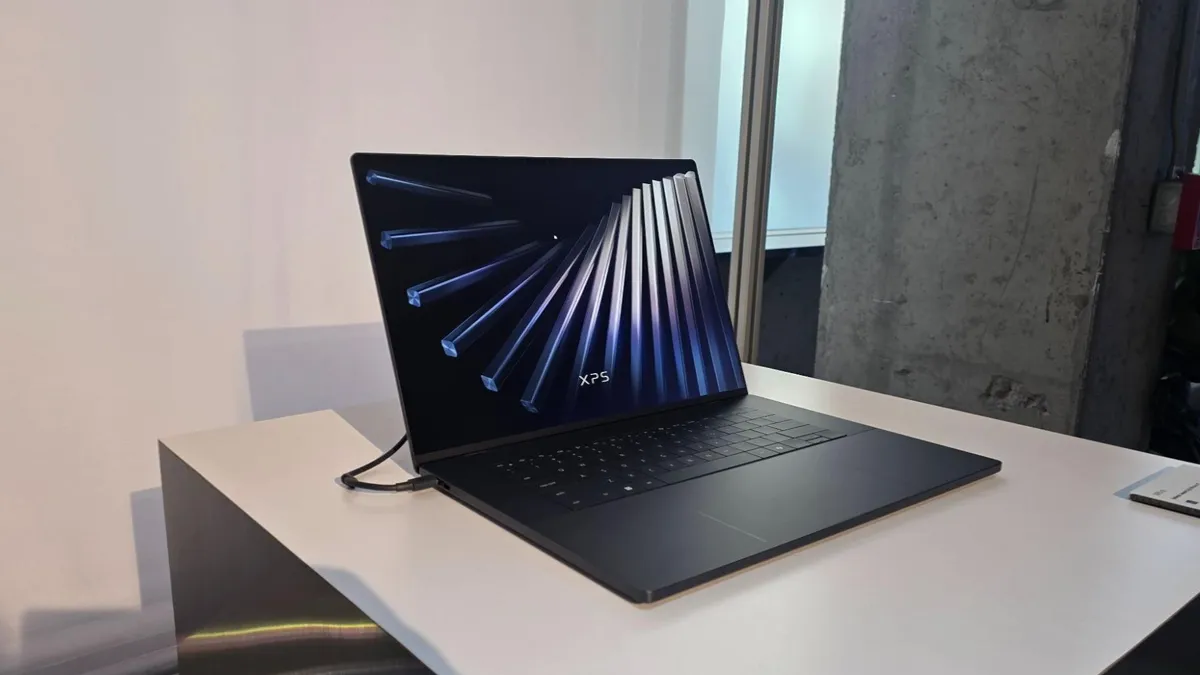
It's rare that a company reverses course from a misstep. It's rarer that they apologize in the process. But for us, what's most important is that the new Dell XPS 14 and 16 look like they may be a return to form for the storied brand.
The new chassis designs are thinner and lighter than their predecessors, and they undo the previous version's biggest design flaws. The new XPS 14 and 16 have full-function rows, ditching the capacitive touchbar that has plagued previous XPS and Dell Premium notebooks. Dell also added etching in the glass palm rest in order to better outline where the touchpad ends. We also appreciate the innovations Dell is bringing to its XPS screens. There's a 1920 x 1200 non-touch display option with a 1 - 120 Hz variable refresh rate, which the company says is a first. That extremely low refresh rate should help save power when static images or text are on the screen. Alternatively, you can opt for a bright tandem OLED touchscreen ranging from 20 - 120 Hz.
Both systems will use Intel's Core Ultra Series 3 chips and are ditching discrete GPUs thanks to Panther Lake's powerful discrete graphics. We're excited to test these systems and see if all of the new design and engineering decisions pay off. — Andrew E. Freedman
Read more: Dell brings back XPS laptops
Best Gaming Laptop: Asus TUF Gaming A14
Asus TUF Gaming A14
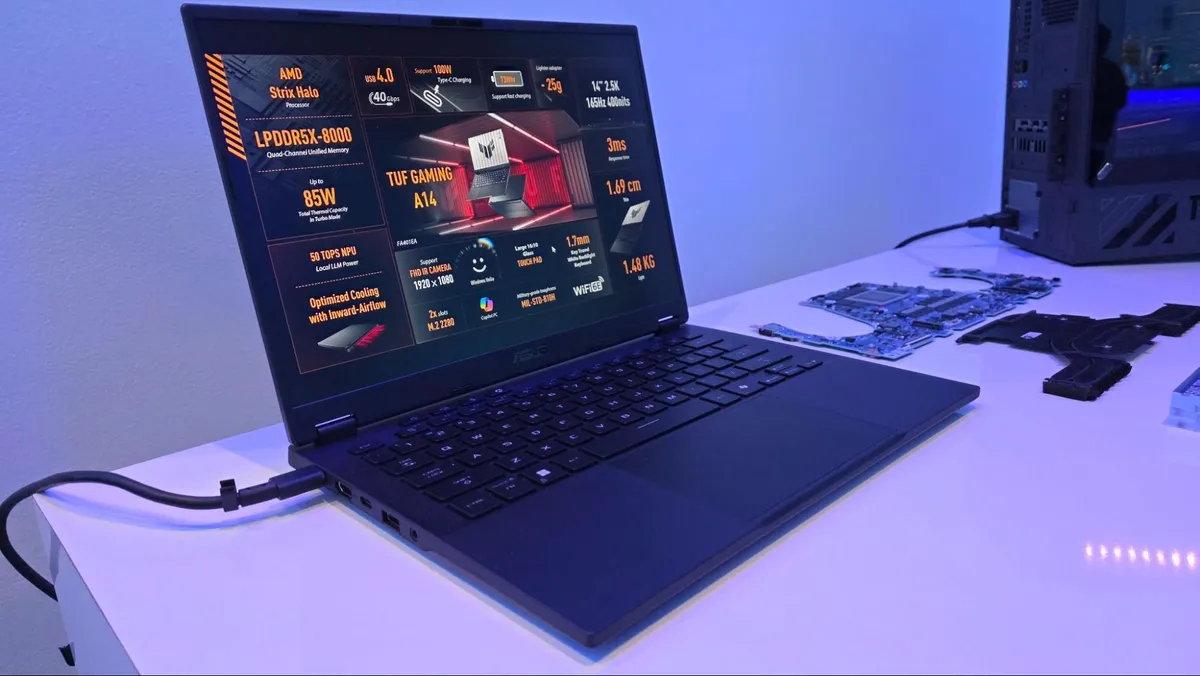
With no new consumer GPUs at CES 2026, all eyes have been on integrated graphics. I expected to see someone be bold enough to put Intel's Core Ultra with 12 Xe Cores into a gaming laptop, but it was Asus using Strix Halo, where integrated graphics made it into a notebook.
Asus has done something similar before — it put a Strix Halo chip in the ROG Flow Z13 last year. But the TUF Gaming A14 is both a more mainstream system and offers a better form factor for gaming. This system goes up to 85W of total thermal capacity in turbo mode, and uses USB Type-C charging for 100W of power.
We've had versions of this laptop on our best list before, so we're excited to see what it can do with Ryzen AI Max+. But with no pricing yet, we're hoping Asus can keep it reasonable for gamers on the go. — Andrew E. Freedman
Read more: Asus puts Strix Halo in the TUF Gaming A14
Best Gaming PC: Asus ROG G1000
Asus ROG G1000
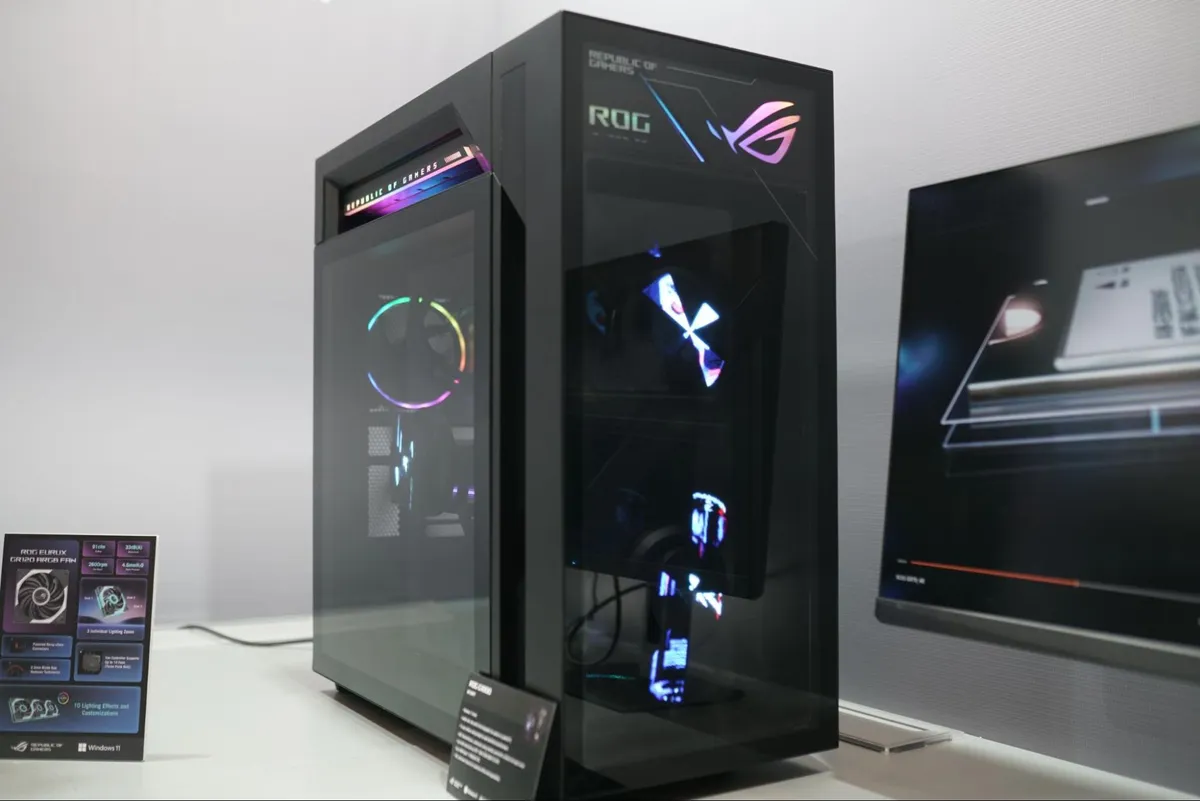
Maybe due in part to the rising cost of RAM, there weren't a ton of exciting prebuilt desktops at CES 2026. But you couldn't see the Asus ROG G1000 and forget it.
This gigantic 104-liter case is covered in LED-covered fans that create holograms, making this one of the most customizable — and unmissable — PCs around. You might think it's cool, you might think it's tacky, but you sure won't forget about it.
Asus packs this system with high-end parts, going up to an ROG Astral RTX 5090 and AMD Ryzen 9950X3D. The company puts the 420 mm radiator in a new chamber that sucks fresh air from outside the case (though we did see HP do that before).
There's no price or release date for this huge, hologram-covered tower, but it will surely be expensive. That's the price of turning heads. — Andrew E. Freedman
Read more: Asus ROG G1000 gaming PC is covered in holograms
Best Gaming Monitor: MSI MPG 341CQR QD-OLED X36
MSI MPG 341CQR QD-OLED X36
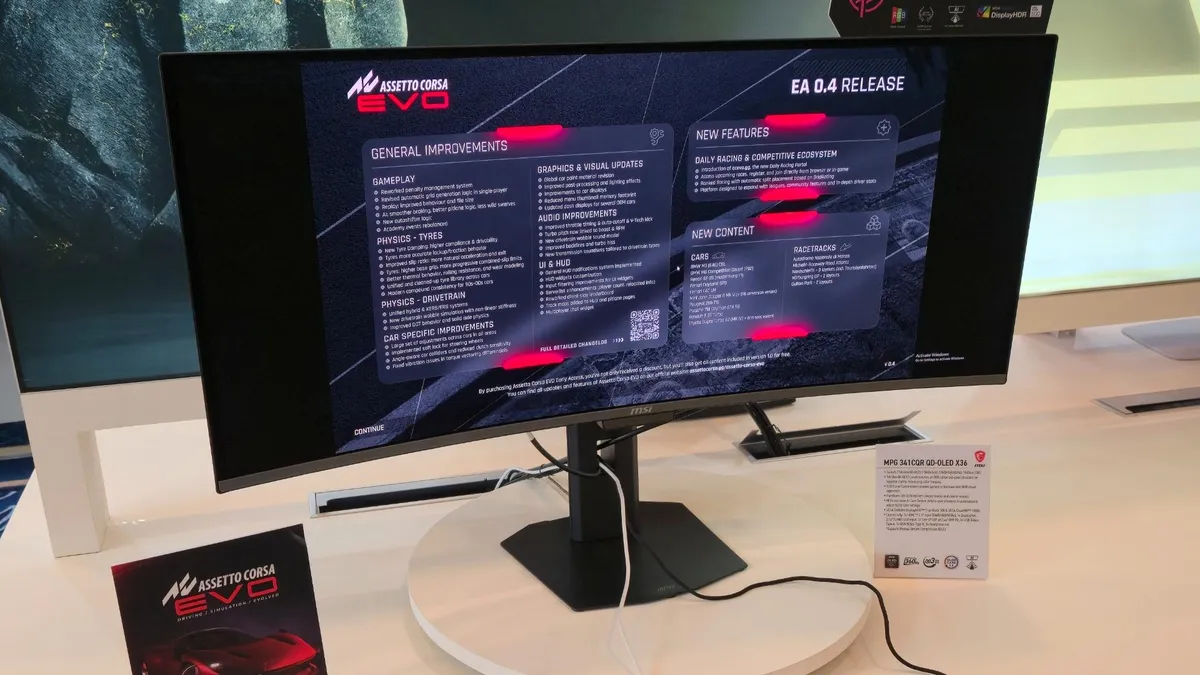
The MSI MPG 341CQR QD-OLED X36 is a 34-inch gaming monitor using fifth-generation QD-OLED panel technology. This new QD-OLED panel aims to right some of the wrongs of previous iterations, namely, blurry text and fringing. Thanks to a new RGB stripe subpixel layout, the MPG 341CQR QD-OLED X36 achieves its goal and then some.
The monitor boasts a typical brightness of 300 nits (1,300 nits peak) and uses a DarkArmor Film to boost black levels by an additional 40%. The 34-inch panel features a 3,440 x 1,440 resolution wrapped around an 1800R curve. And importantly for the enthusiast community, the refresh rate tops out at 360 Hz with a response time of 0.03 ms.
MSI has infused the MPG 341CQR QD-OLED X36 with two HDMI 2.1 ports, one DisplayPort 2.1a port, and a USB Type-C port (DisplayPort Alt Mode with 98W PD). When it comes to your peripherals, there are two downstream USB-A (5 Gbps) ports and a 3.5 mm headphone jack. The monitor also includes the MSI OLED Care 3.0 AI Care Sensor, which uses an NPU-based IC to detect whether a person is sitting in front of the monitor. It can then choose to implement power-saving routines or initiate automatic pixel-refreshing routines to prolong panel life. — Brandon Hill
Read more: MSI's fifth-generation QD-OLED gaming monitor embraces RGB stripe subpixels
Best Productivity Monitor: Dell UltraSharp 52 Thunderbolt Hub Monitor (U5226KW)
Dell UltraSharp 52 Thunderbolt Hub Monitor (U5226KW)
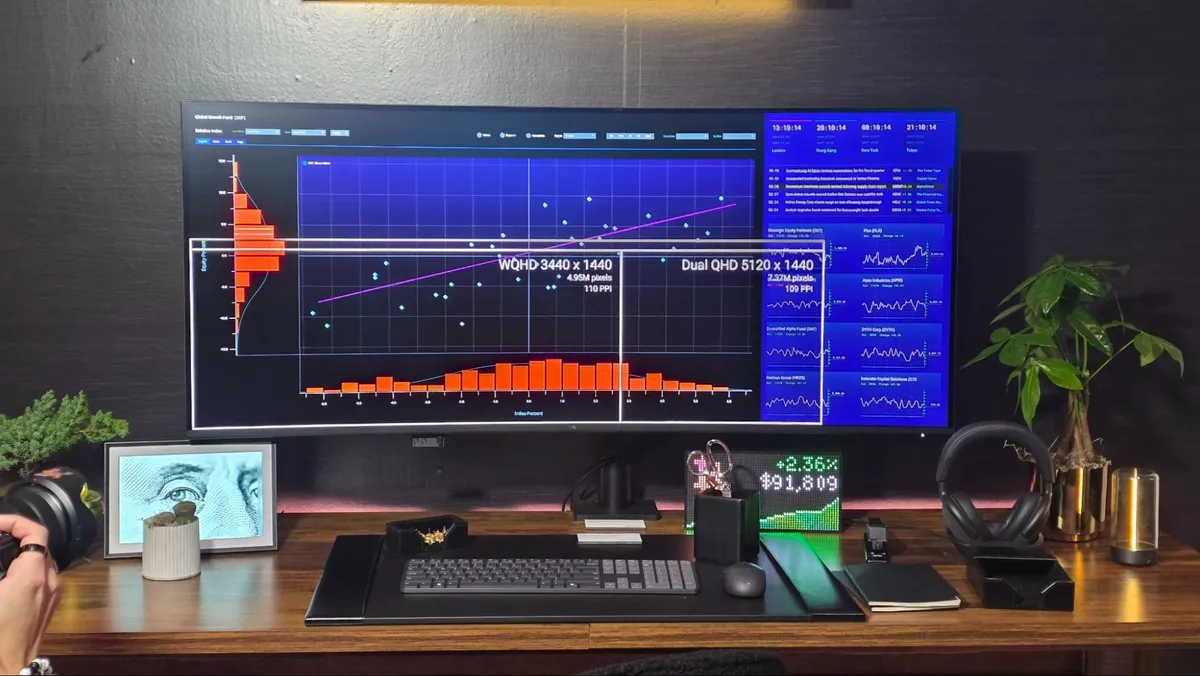
While we all love gaming monitors, sometimes we need something more geared toward productivity tasks. In that case, Dell is answering the call with the UltraSharp 52 Thunderbolt Hub Monitor. The first thing that catches your eye is the sheer size of the monitor, which in this case, stretches 52 inches across.
The next headlining spec is the resolution, which comes in at an incredible 6,144 x 2,560 and 129 PPI. In other words, the UltraSharp 52 Thunderbolt Hub Monitor makes the 45- to 48-inch Dual QHD (5,120 x 1,440) monitors seem rather quaint. The refresh rate is “only” 120 Hz, but we have to consider the number of pixels that we’re dealing with here. And we seriously doubt, even with today’s best graphics cards, that many people would attempt playing AAA games at maximum resolution.
The UltraSharp 52 Thunderbolt Hub Monitor uses IPS Black panel technology that helps it achieve a 2,000:1 contrast ratio, which is double that of typical IPS panels. And given its productivity roots, the monitor features two HDMI 2.1 ports, two DisplayPort 1.4 ports, four downstream USB-A (10 Gbps) ports, three downstream USB-C (10 Gbps) ports, one Thunderbolt 4 port, and a 2.5 GbE LAN port. There’s also a KVM switch, allowing the UltraSharp 52 Thunderbolt Hub Monitor to be used with up to four computers simultaneously.
Dell has managed to pack a lot into the UltraSharp 52 Thunderbolt Hub Monitor, and it is priced accordingly. It’s available now for $2,899.99. — Brandon Hill
Read more: Dell debuts monstrously large 52-inch 6K ultrawide monitor
Best Power Supply: MSI MPG AI1600TS PCIE5
MSI MPG AI1600TS PCIE5
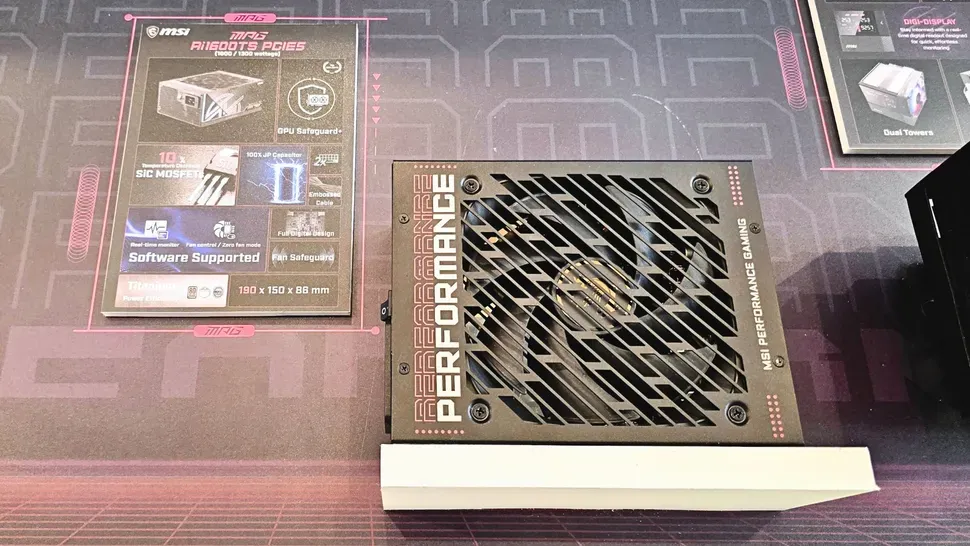
MSI’s latest flagship power supply, the MPG AI1600TS, isn’t only 80-PLUS Titanium-rated, it boasts what the company calls “GPU Safeguard+,” which monitors every pin on each of the PSU’s two native 12V-2x6 power connectors. As soon as there’s an uneven load across each cable, a protection measure is tripped, alerting the user to the issue via software or a built-in alarm. Additionally, if you’re away from your desk when a fault is detected, your PC will power off after three minutes, preventing any further damage to your precious components. Given the number of melted power connector horror stories that we’ve published over the past year and change, this is a more than welcome new feature to protect your PC.
The AI1300TS PCIE5 comes packed with the same features, and sporting two 12V-2x6 connectors, it’s likely that if you plan to run or overclock a high-end graphics card, you’ll want the larger capacity variant. The PSU is PCIe 5.1 ready, in addition to sporting server-grade components like 105°C Japanese capacitors and SiC MOSFETs, which MSI claims generate less heat in operation. With extra additions like a zero-RPM fan mode, as well as stable power delivery, reducing fluctuation on the 12V rail to ±1%.
The PSU is set to ship alongside 12V-2x6 cables with a dual-color design, ensuring that you have a good visual guideline for when they are seated correctly, as well as pre-installed cable organizers to help you cable manage your next big build.
There’s no word on pricing or a release date for the MSI MPG AI1600TS PCIE5, but it’s sure to become a popular option amongst enthusiasts for its wide array of safety features. — Sayem Ahmed
Read more: MSI introduces GPU Safeguard tech on its latest PSUs to fend off RTX 5090 meltdowns
Best Motherboard: MSI MEG X870E Unify-X MAX
MSI MEG X870E Unify-X MAX
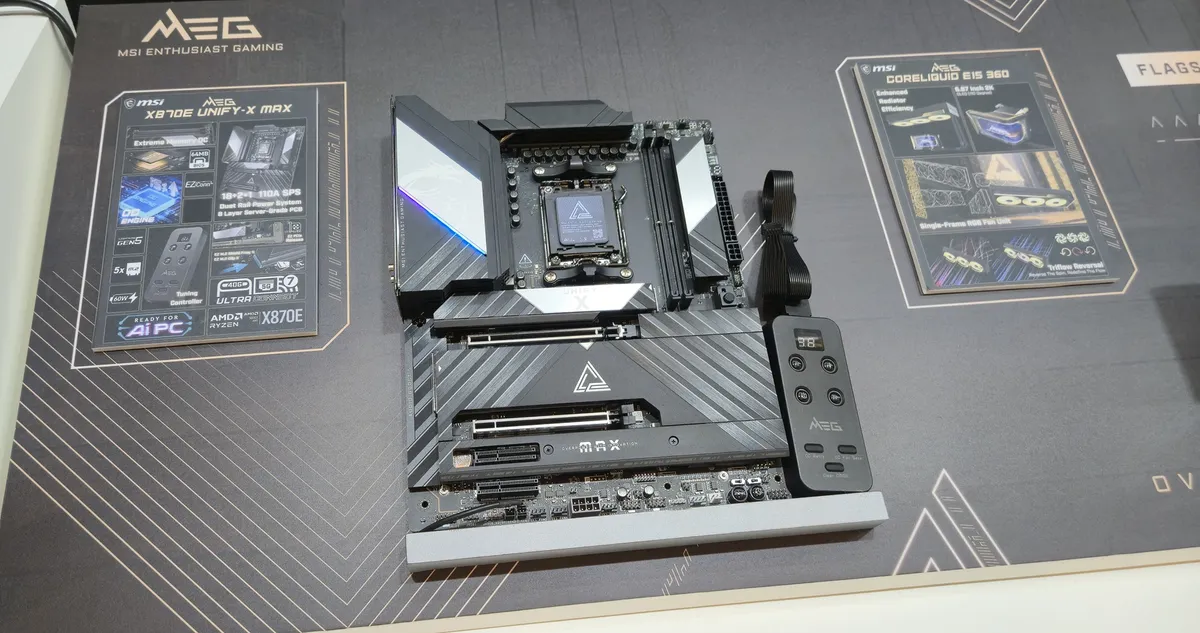
Motherboards were an interesting bunch for CES, with mostly refreshes on the menu. However, we saw a couple of options worth considering from Asus with the new Crosshair X870E Glacial and Dark Hero motherboards, but I have a passion for boards that lean towards overclocking (and chances are they do most everything else well, too). MSI’s new X870E Unify-X MAX blends overclocking, performance, and style, making it one of the best new refresh motherboards for AMD’s existing Zen 5 processors and upcoming models like the Ryzen 9 9950X3D2.
The Unify-X MAX is decidedly designed for overclocking with a 2-DIMM configuration and the included tuning controller. MSI mentioned memory support to over DDR5-10000, which is incredibly high for the platform (and likely accomplished via 8000-series APUs). That, combined with the robust 18-phase 110A SPS MOSFETs for Vcore, the limit is your cooling and patience for tweaking, not the motherboard. MSI makes pushing the limits easier with the included Tuning Controller for on-the-fly overclocking adjustments, saving time on reboots and reducing trips to the BIOS.
In addition to being dialed in for overclocking, it looks the part of a premium motherboard with oversized VRM heatsinks and large plate-style heatsinks covering much of the PCB. While it is designed for overclocking, you get some of the best features the platform offers, including 5 M.2 sockets (2x PCIe 5.0), Wi-Fi 7 and 5 GbE, USB4 (40 Gbps), and several EZ features that make installing and removing parts easier.
Pricing or availability were’t mentioned, but we expect the MEG X870E Unify-X MAX to fall in the premium mid-range space and land on store shelves soon. Keep an eye out for our review to see if it really measures up to the hype. — Joe Shields
Read more: MSI unlocks the full power of AMD CPUs with new MEG X870E Unify-X Max motherboard
Best Concept: Lenovo Legion Pro
Lenovo Legion Pro Rollable
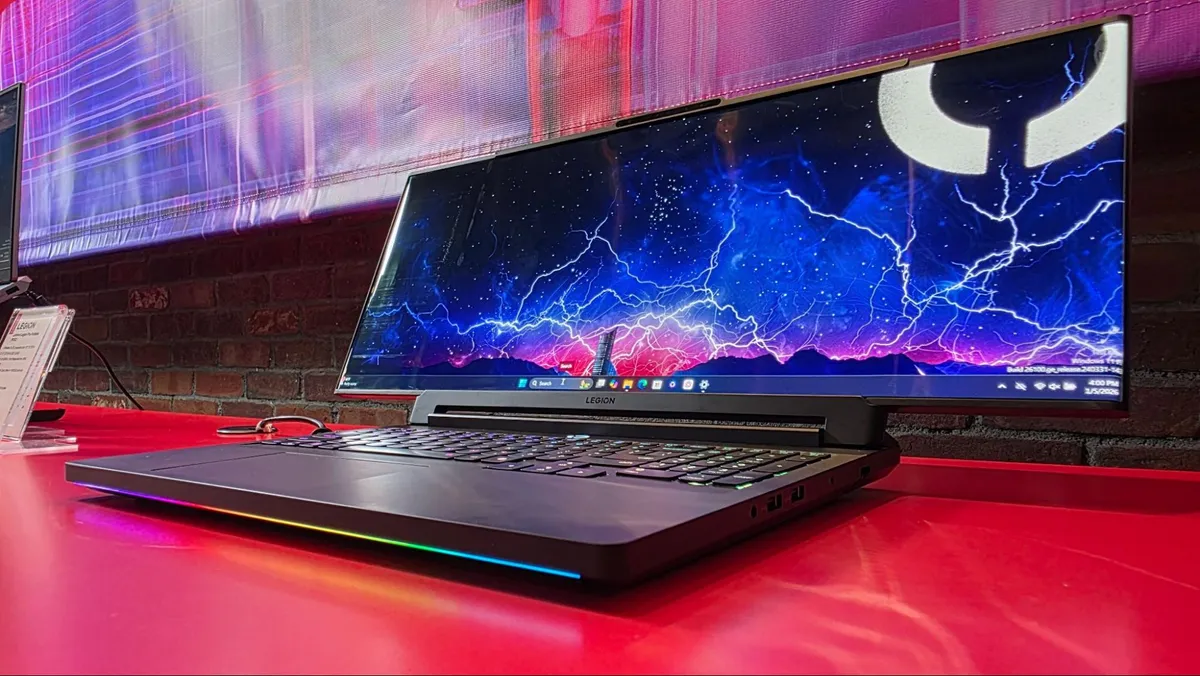
Lenovo has been steadily pushing out foldable and rollable OLED laptops in recent years. But the Legion Pro is the company's first gaming-focused rollable and its first with a horizontally expanding screen. Starting out in a traditional, backpack-friendly 16-inch chassis, the motorized screen can expand to 21.5 and 24 inches.
As this rollable is still a concept, we didn't actually get to play any games on it. And the motorized mechanism still needs work to keep the expanding screen taught. But Lenovo has solved this problem with previous rollables, so I'm confident it can do the same with any future iterations of its gaming rollable.
As someone who never feels like there's enough screen in front of me, whether I'm gaming or working, the idea of being able to carry around a high-resolution 24-inch screen in a 16-inch sized laptop has me excited for the future. And with the rising price of RAM and storage and companies talking about re-releasing years-old hardware to meet consumer demand in a market where AI is consuming seemingly all of the cutting-edge silicon, I'll take whatever future-looking excitement I can find. — Matt Safford
Read more: Lenovo's CES concept devices include a rollable ultra-wide OLED Legion gaming laptop
Best Keyboard: Corsair Galleon 100SD
Corsair Galleon 100SD
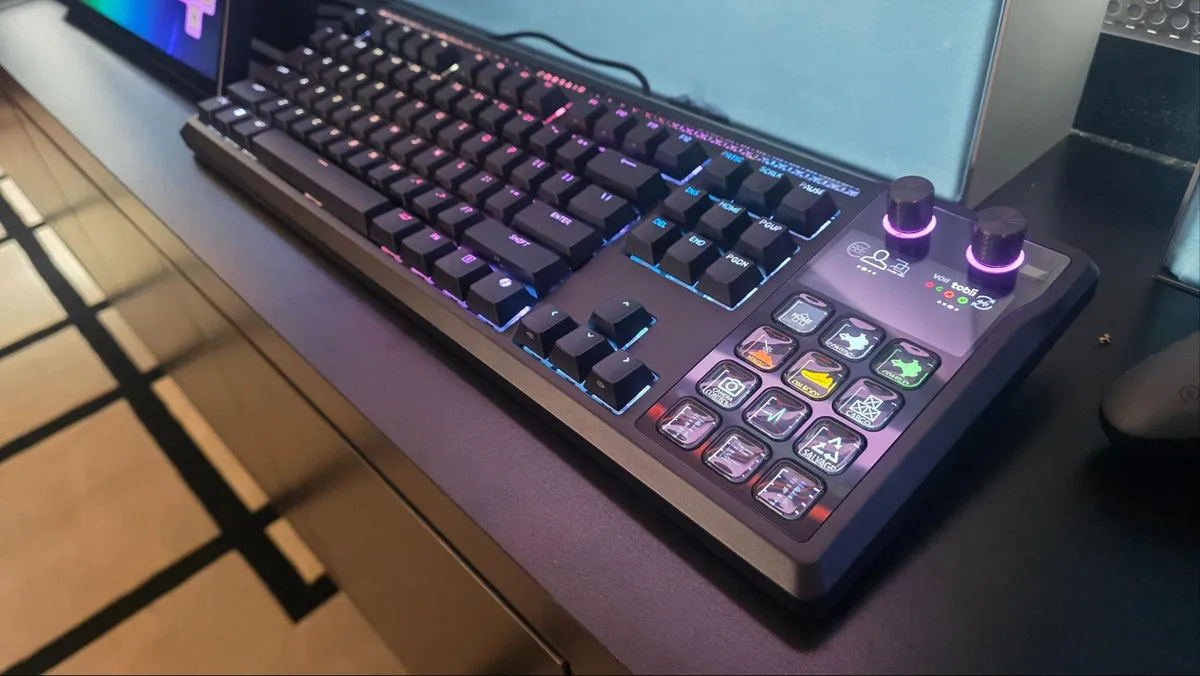
The problem with keyboards — even full-size ones with extra macro keys — is that they just don't have enough keys for some people, which is why Stream Decks and macro pads are so popular (with a certain crowd, anyway). Well, Corsair acquired Elgato nearly eight years ago, so it's actually a little surprising we had to wait this long to see a Stream Deck integrated into a keyboard. But it's finally here in the Corsair Galleon 100 SD — a full-size gaming keyboard with a built-in Stream Deck. It's got 12 customizable LCD keys, two customizable dials, and a customizable full-color LCD screen (720 x 1280 pixel resolution) for stats or clocks or whatever it is people put on their Stream Deck screens. Like standalone Stream Decks, the LCD keys are also fully customizable — you can program to do just about anything, including multiple, timed actions (like a very powerful macro key), and you can also customize the display.
Of course, it's not just a Stream Deck, and Corsair is keeping keyboard enthusiasts in mind with the design. The Galleon 100 SD features an aluminum top plate, a gasket-mounted hot-swappable PCB, and six layers of sound-dampening foam in the case. It will ship with Corsair's pre-lubed MLX Pulse linear mechanical switches, and will feature a polling rate of up to 8,000 Hz and FlashTap SOCD, as well as a separate game mode and regular macro recording in Corsair's Web Hub (though it seems the Stream Deck will be managed through Elgato's Stream Deck app). Pre-orders are open now, and Corsair expects to start shipping around the end of January. The Galleon 100 SD will cost $349.99. — Sarah Jacobsson Purewal
Read more: Corsair's Galleon 100 SD is an LED-lit keyboard with a built-in Stream Deck
Best 3D Printer: Creality Sparkx i7
Creality Sparkx i7
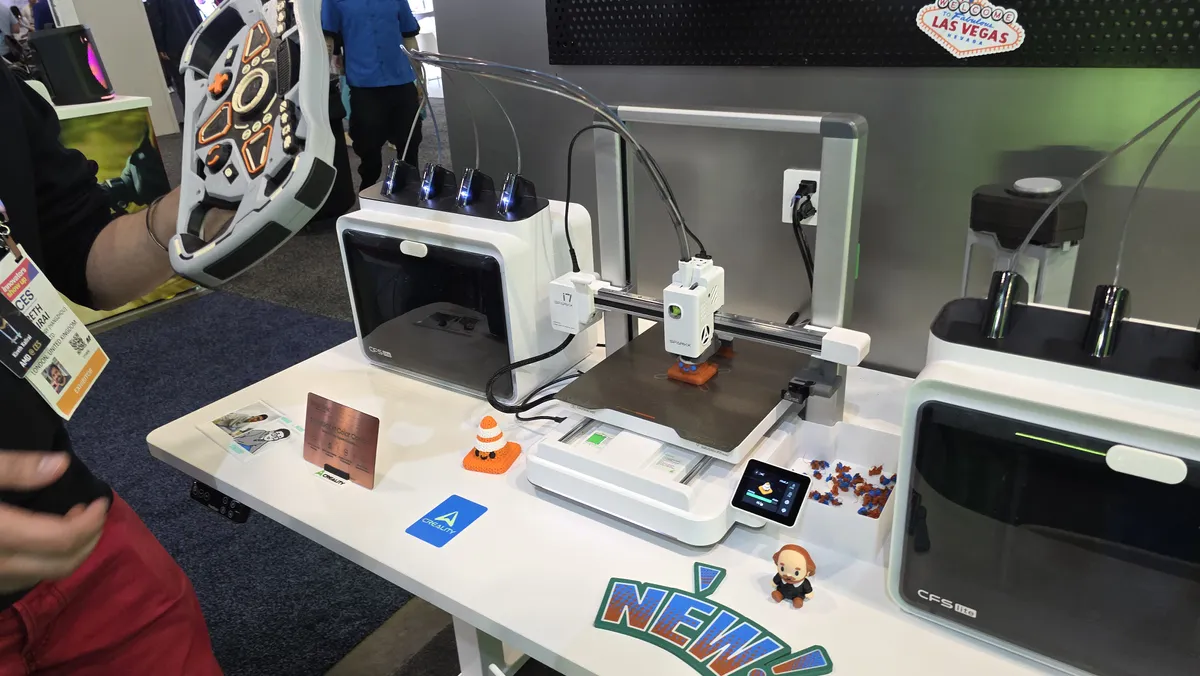
Creality is a well-known 3D printer brand that regularly wins spots on our list of the Best 3D printers on the market, and the company’s latest Sparkx i7, which debuted at CES, is designed to bring the hobby to beginners and entry-level enthusiasts through a suite of easy-to-use features and software. We’ve had this 3D printer in our test labs and just released a full review, where it won our Editor’s Choice award, taking the top spot in our recommendations for the Best 3D printers for beginners from the Bambu Lab A1 mini.
Why? The Sparkx i7 couples leading-edge capabilities for the budget market with features designed to simplify 3D printing for beginners, which begins with the software. The CubeMe software is an AI-powered tool that automatically converts 2D photos into 3D-printable models, reducing the complexity of what can be, at times, overwhelming CAD programs used for model design.
The simplicity ethos also extends to the hardware, with a tool-free quick-swap hotend and filament cutter that are easily accessible, simplifying maintenance tasks. The printer hardware features a strong roster of capabilities, such as a 260x260x255mm build volume, print speeds of 500 mm/s with an acceleration of 10,000 mm/s, a 300 °C hotend, a built-in AI camera, and the ability to print with PLA, PETG, and TPU filaments. The printer also supports multi-color printing with a focus on reducing purging waste by 50%, addressing one of the traditional drawbacks of multi-color printing. — Paul Alcorn
Read more: Creality SPARKX i7 Review: Not just another color bedslinger
Best Mouse (Pointing Device?): Keychron Nape Pro
Keychron Nape Pro
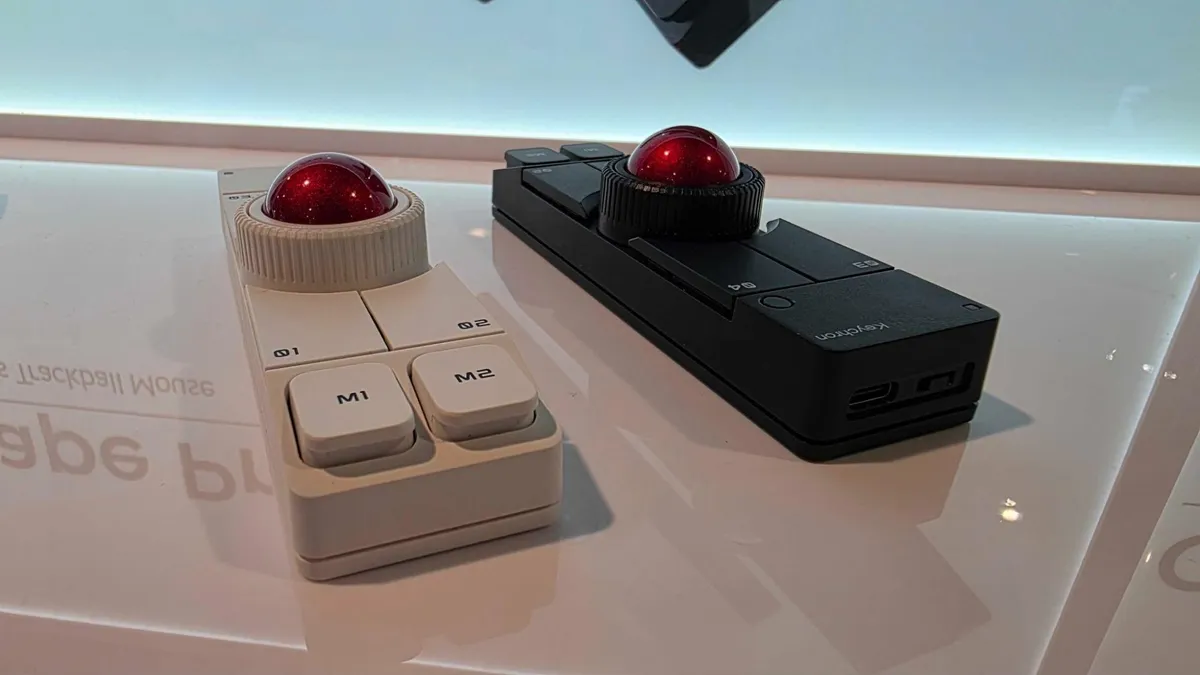
The problem with trackball mice is that they're still mice — just mice that don't move. So they probably shouldn't be shaped like mice, right? Right (says Keychron).
The Nape Pro is a small wireless standalone trackball... device, designed to bring flexible trackball functionality to mechanical keyboard users. It features a large center trackball with a click wheel around it, surrounded by four programmable buttons and two side keys. Tom's Hardware's Matt Safford had a chance to check it out on the show floor, and he said the ball movement and wheel felt great — "some of the other buttons, not so much. But I think that's partially because those buttons are designed to be kind of blindly mashed from the side." (Fair enough.) The slim design means you can put it below or beside (or, I suppose, on top of) your keyboard, so you can move your cursor without moving your hands (too much). And, of course, the buttons are programmable.
The Nape Pro started out as a collaboration between Keychron and Gizmodo Japan, but it has yet to launch in the U.S. Pricing hasn't been confirmed, but a Keychron rep said it will probably cost "around $50." — Sarah Jacobsson Purewal
Read more: Keyboard giant Keychron unveils new Nape Pro trackball with programmable buttons
Best Headset: Audeze Maxwell 2
Audeze Maxwell 2
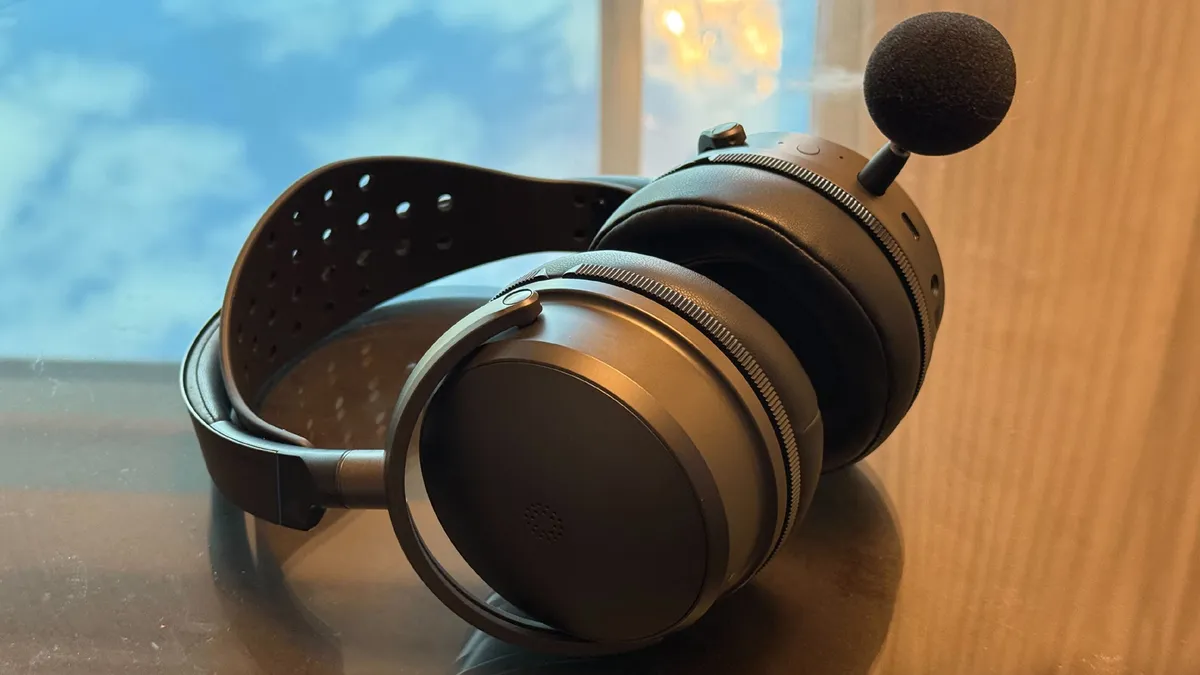
One of our favorite gaming headsets is getting a big audio upgrade that should make it better for gaming and music — even though it's already great for both. Audeze launched the Maxwell 2 at CES 2026 — this is the second generation of the premium audio brand's foray into gaming, and it comes with all sorts of improvements to, well, audio. The main improvement involves Audeze's "SLAM" technology (patent-pending), which allows for better spatial immersion and precision and was first introduced in the company's $5,995 flagship CRBN2. This should make the headset's 90mm planar magnetic drivers sound even better and make it easier for you to pinpoint the exact direction you're hearing those footsteps from. Tom's Hardware's Jeffrey Kampman had a chance to check out the headset in person and he confirmed that details and positional audio sounded spectacular and very transparent to the source material.
On the other side of audio, the headset also features an improved noise-canceling microphone system, which should be interesting to test out — we found the mic on the original Maxwell to be pretty good, and the AI-powered noise canceling to be decent, so (hopefully) it can only get better. The Maxwell 2 also has a new, wider suspension strap and a new earpad design with more space, for a more comfortable experience. It's still pretty hefty, though. Like the original Maxwell, it will have both 2.4GHz wireless and Bluetooth connectivity (as well as wired — Audeze is, after all, still an audio company), and it will get a solid 80 hours of playtime over either connection type.
The Maxwell 2 is available now, starting at $329 for the PlayStation version and $349 for the Xbox version (both versions support PC, as well as Android, iOS, and Nintendo Switch). — Sarah Jacobsson Purewal
Read more: Audeze launches Maxwell 2 headset, with better spatial immersion and bass
Best PC Case: CyberPowerPC MA-01
CyberPowerPC MA-01
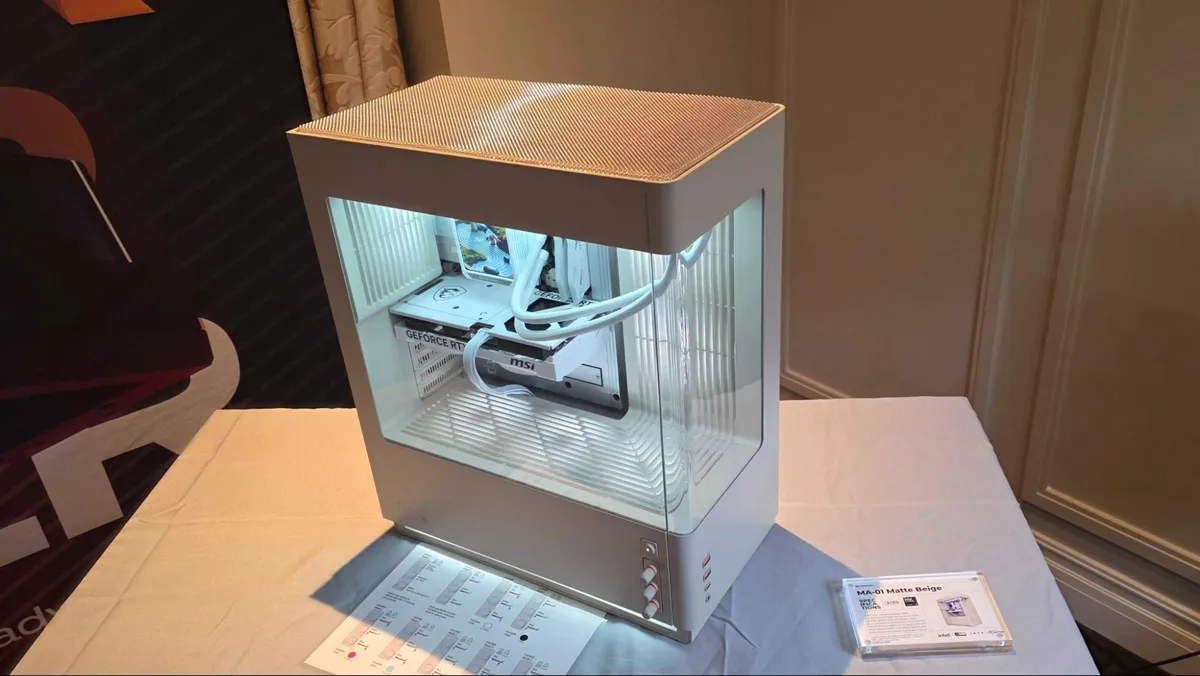
Case aesthetics are always subjective, but if you like clean, swooping lines, curved glass, hidden cables, and interesting innovations, CyberPowerPC’s MA-01 is one of the most interesting PC enclosures in years. Arriving first as a prebuilt chassis, and later as a standalone case in three different colorways, the case features three knobs for dialing in exact shade, brightness, and effect for its RGB lighting, louvered vents to direct air intake directly toward key components, and a woven steel mesh top exhaust for cutting exhaust noise and resonance. It’s also generally the prettiest PC chassis I’ve seen since the launch of the wood-accented Fractal North in 2022.
That’s in part because the MA-01 is just oozing with examples of attention to detail, from the orange accents on the front-panel ports and the tactile RGB control knobs, magnetic brackets to hide bracket and screw mounts, and RGB that hides the actual lights, while bathing aspects of the case with warmer, indirect light. And the flowing lines surrounding the motherboard are actually angled vents designed to keep cool air moving over your warm-running components, rather than entering from one point and exhausting from another without actually doing much in the way of cooling. I’m not sure if the MA-01 will take the prettiest PC case spot on our best PC case list, but it’s the strongest contender in years, and I’m excited to see what CyberPowerPC does with any new cases in this lineup. Because you probably don’t name something MA-01 without there being a strong possibility for an MA-02 and MA-03. But let’s not get ahead of ourselves. The MA-01 looks to be one of the most interesting cases of 2026. — Matt Safford
Read more: CyberPowerPC's MA-01 comes with analog color control knobs, woven steel mesh, and slanted airflow
Best Cooler: Thermaltake Retro Ultra AIO
Thermaltake Retro Ultra AIO

In an age where AIOs and even heatsinks need to work hard to stand out, Thermaltake did so by looking to the past, drawing on classic tech aesthetics and modern design, with a detachable display that looks like one of my early PCs with an old-school CRT monitor on top. But that retro styling looks at home in the accompanying Retro 260 TG (MicroATX) and Retro 280 (Mid-tower) chassis, reminiscent of the 80s and 90s.
The throwback AIO comes in 240mm and 360mm sizes, both using single-frame fans (the two or three fans are one unit) with RGB lighting circling the outside. Details are scarce on the specifications and internals. The 3.6-inch TFT LCD is customizable, displaying system information, retro graphics, and your own custom theme via TT RGB Plus 3.0 software. Mounting and removal of the cold plate for maintenance is easy with Thermaltake's four-screw system.
I have to admit, the entire series tugs on the nostalgia strings and is one of the more unique designs we’ve seen at CES. Pricing and availability weren’t mentioned, but Thermaltake tends to offer solid value, which could turn the heads of some Gen X’ers interested in reliving their past with modern underpinnings. — Joe Shields
Best Toy Tech: Lego Smart Play
Lego Smart Play


Lots of us love Lego – both as kids and adults – for its ability to spark imagination, develop problem-solving skills, and let us build worlds that exist both in our hands and in our minds. But experiments with Mindstroms and remote-controlled vehicle kits, Lego has largely kept the kind of tech hardware we love out of its mainstream products – until the company announced Smart Play here at CES 2026.
Set to debut in march in three Star Wars sets, Smart Play embeds a tiny ASIC into a 2x4 Lego brick, as well as a speaker, a color sensor, an accelerometer, LEDs, and a Bluetooth-based BrickNet to allow pieces and Minifigures to interact with each other, without the need for an app or a hub for setting things up or interacting with compatible tags, minifigures, and other Smart Play pieces. A wireless pad will power up the bricks when they need a recharge, although it’s not clear how often that might be.
It’s early stages for Lego’s new tech, to be sure. And the company seems to be taking a somewhat cautious approach to the tech by rolling it out first in just three sci-fi-themed Star Wars sets. But I’m interested to see what the company does with the platform in the future, and excited to get some hands-on time with Smart Play here in Las Vegas. — Matt Safford
Read more: Lego unveils new smart brick with embedded computer inside
Best Retro-inspired PC Case: Thermaltake Retro 260/360 TG
Thermaltake Retro 260/360 TG

Fresh off a trip back to the future, and building on what Silverstone recently started, Thermaltake entered the retro case market, showing off the new Retro 260 TG and Retro 360 TG cases that blend classic 80s and 90s PC look with modern features and specifications. The new chassis sports retro styling cues on the front that mimic a 3.5-inch floppy disk drive, and it even has two 5.25-inch bays, one of which is a mock optical drive. On top of that, the color is that familiar oxidized plastic off-white that really locks in the retro vibe.
The cases come in two sizes. The Retro 260 TG is the MicroATX option, supporting up to 240 mm AIOs in the top, while the 360 TG is the mid-tower/ATX case, supporting up to 360 mm AIOs in the top or the side. The Retro 260 TG holds up to nine 120mm fans, while the 360 TG handles up to twelve, so there’s plenty of airflow for modern components. The front I/O features modern connectivity, including a single USB 3.2 Gen 2 (10 Gbps) Type-C port, dual USB 3.0 (5 Gbps) ports, and front-panel audio—typical fare for the 21st century.
In line with the retro styling, Thermaltake also announced the Retro 240 and Retro 360 AIOs (which earned our best cooling award at CES) to perfectly match the classic appearance with a small CRT-styled LED on the pump. If you want more modern bling, both cases fit Thermaltake’s 6-inch LCD Screen Kit for the front, adding a touch of modern while still maintaining the retro aesthetic.
Unfortunately, additional details like pricing and the release date are few and far between, and we couldn’t pry the information out of them in the ballroom. Still, we expect to see these available to buy sooner rather than later. We love seeing these retro-inspired cases with modern features on the market, and Thermaltake has done a great job with these chassis (their whole retro ecosystem). At the same time, this makes those who cut their teeth on PCs in the 90s feel old! — Joe Shields