Geekbench 6 warns about inconsistent benchmarking performance from new Core Ultra 200S Plus chips — says Intel's IPC boosting Binary Optimization Tool modifies scores in 'unclear' fashion
iBOT could be a game changer for Intel, but is proving to be a headache for benchmarking tools.
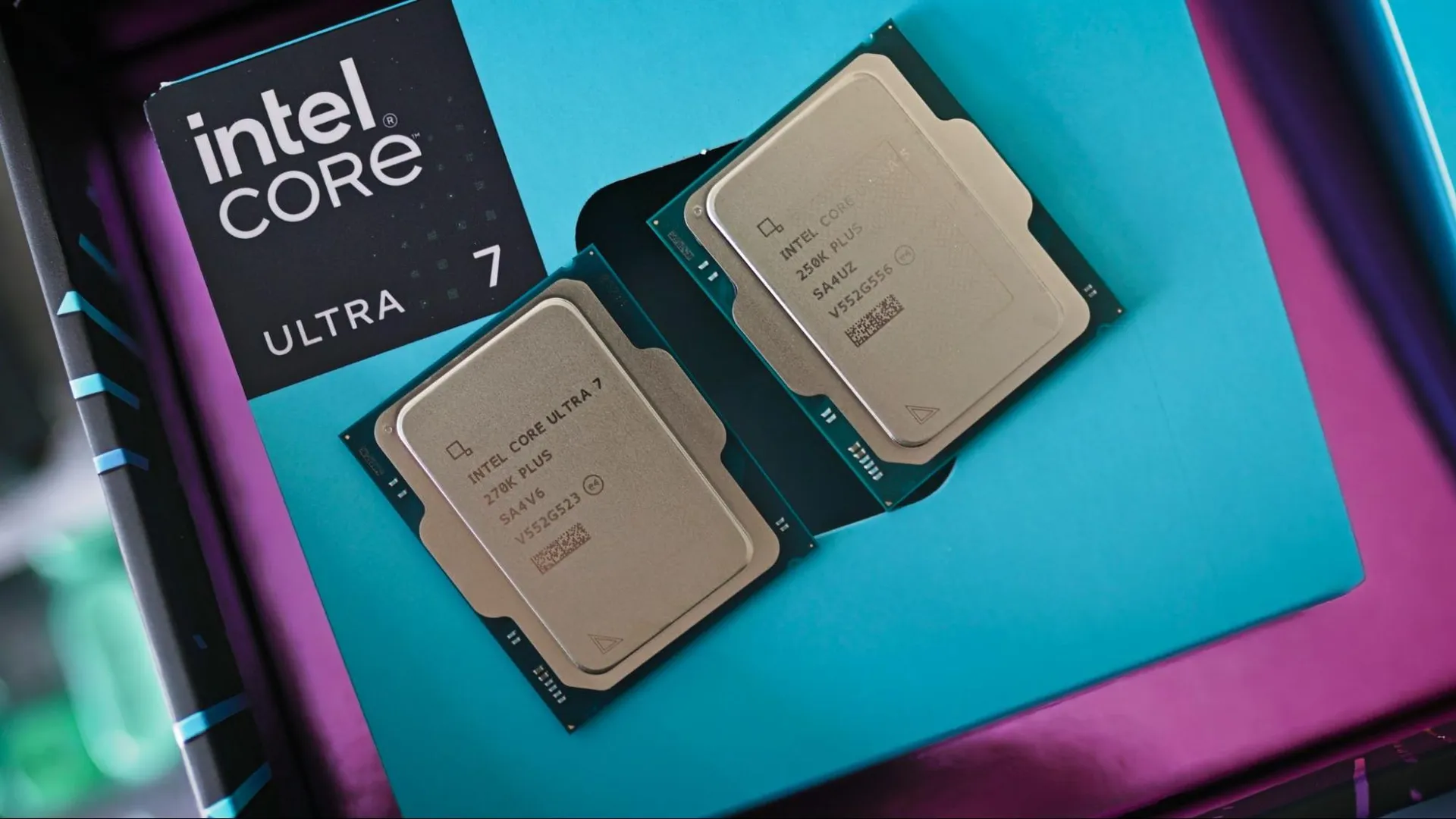
One of the most noticeable upgrades Intel made to its latest Core Ultra 7 270K Plus and 250K Plus CPUs was the introduction of its Binary Optimization Tool that manipulates instructions at the hardware level to boost IPC. The tool is highly beneficial for squeezing extra performance out of the Arrow Lake architecture, but it has led to concerns over benchmarking accuracy and consistency with these chips. John Poole from Geekbench posted a warning to its users that Intel's latest tool can't be trusted at this time, and there's no way to identify when the tool is enabled or disabled during a benchmark run.
Pool revealed that Intel does not have any public documentation on the techniques the Binary Optimization Tool (or iBOT) uses to optimize code, making it difficult to determine how effective iBOT's techniques are when applied to a variety of different applications. Furthermore, this problem makes it impossible for Primate Labs (the makers of Geekbench) and its userbase to understand how iBOT is boosting performance compared to benchmarks that run without it. According to Poole, Geekbench 6 workload scores on the chips increase by up to 40% with iBOT enabled, with overall scores improving by up to 8%. "Since the tool modifies the benchmark, and it is unclear to both Primate Labs and the general public how these changes occur," he warned.
To deal with this problem, Geekbench will provide a warning on all Geekbench benchmark listings featuring iBOT-supported chips with the following description: “This benchmark result may be invalid due to binary modification tools that can run on this system.”
Unfortunately, the Geekbench developers don't have any other choice but to treat iBOT in this manner. Benchmarking consistency from run to run is very important for both users and the teams that create benchmarking apps, such as Geekbench 6, and losing this capability removes a benchmarking application's usefulness and credibility.
Thankfully, Intel is aware of these discrepancies; Intel told Jake Roach, one of Tom's Hardware's editors and main CPU reviewer, that it is cautious about rolling out the feature and wants to avoid any claims of playing dirty tricks to look better on benchmarks. Currently, iBOT is supported only in a handful of PC games, with the exception being Geekbench 6.3. Intel is using iBOT in Geekbench 6.3 as a proof of concept for how iBOT could potentially perform in non-gaming workloads. For instance, in our review of the 270K Plus, we tested iBOT in Geekbench 6.3 and saw performance improve by around 10% compared to the 265K.
The Core Ultra 7 270K Plus and Core Ultra 5 250K Plus debuted this week as potentially Intel's last hurrah for the LGA 1851 platform before Nova Lake arrives later this year. In our reviews of both chips, we found both make significant improvements on the lackluster Core Ultra 200S series parts that preceded them. Pricing for both SKUs is substantially cheaper than their non-Plus counterparts, while providing noticeably superior multithreading performance thanks to the addition of four extra E cores.
Follow Tom's Hardware on Google News, or add us as a preferred source, to get our latest news, analysis, & reviews in your feeds.

Get Tom's Hardware's best news and in-depth reviews, straight to your inbox.

Aaron Klotz is a contributing writer for Tom’s Hardware, covering news related to computer hardware such as CPUs, and graphics cards.
-
Notton Alternate title: Geekbench 6 is a worthless benchmarking tool and no one should use it or listen to what they sayReply -
Neilbob Reply
But what else are people going to use to define wildly unrealistic performance narratives? What other tool are certain large corporations WILDLY invested in?Notton said:Alternate title: Geekbench 6 is a worthless benchmarking tool and no one should use it or listen to what they say -
usertests Reply
I always prefer other benchmarks, particularly PassMark as a quick synthetic comparison, and actual games to show the benefits of bigger L3 cache.Notton said:Alternate title: Geekbench 6 is a worthless benchmarking tool and no one should use it or listen to what they say
However, it's not great that Intel's very short list of iBOT-enhanceable games/apps includes a benchmark that people expect to measure the CPU's performance. Maybe it's not really benchmark cheating to use iBOT, but if it works with 0.01% of games/apps instead of say, 80%, it's creating false expectations.
On the other hand, if Intel is going to diligently update iBOT to work with new and CPU demanding games in the coming years, they are giving their users access to free performance and efficiency. So let them cook. -
Geef Easy way to resolve the problem when you benchmark. As long as it doesn't take much time to convert the EXE file, just make two copies of the benchmark and then tag the Excel data sheet with a check box that says iBOT.Reply
The amount of time it took to write their article was probably enough to get all of the above setup. Unless... maybe if they were never trained in Excel and don't know how to insert another column... :eek: The horror! -
ejolson A useful benchmark should produce a verifiable result that can be checked to verify the expected calculation was performed in the measured time. I actually thought that's what Geekbench did and would be surprised if it didn't.Reply
In other news, since IBM introduced the System/360 in the 1960's processors have not executed the instructions generated by the programmers and the compilers. A micro-op instruction cache, branch prediction, register renaming and speculative execution can also increase performance. -
cknobman If iBOT optimizations have to be implemented by Intel for there to be any benefit then when looking a processor performance compared to competitors IT IS USELESS.Reply
And it would be disingenuous for Intel to optimize for iBot in Geekbench specifically and claim those scores are valid.
Right now iBOT seems like a neat marketing pitch and has potential. But the reality is without Intel making optimizations for the applications it will be worthless.
See the issue with that? -
TerryLaze Reply
They don't need to make optimizations, the CPU does that by itself, they have to make sure though that what the CPU does isn't complete nonsense that will get your system bricked and kill all your data...see the issue with that?!cknobman said:If iBOT optimizations have to be implemented by Intel for there to be any benefit then when looking a processor performance compared to competitors IT IS USELESS.
And it would be disingenuous for Intel to optimize for iBot in Geekbench specifically and claim those scores are valid.
Right now iBOT seems like a neat marketing pitch and has potential. But the reality is without Intel making optimizations for the applications it will be worthless.
See the issue with that?
That's why they only allow the titles they have tested enough to be sure about (and still give you an off/on button just in case) . -
usertests Reply
I honestly don't think it's useless if they optimized, for example, 10-20 more CPU-intensive or popular titles every year. A small percentage of games are getting a majority of the play time. But if that's what they're forced to do, I don't trust that they will keep it up for a long time.cknobman said:If iBOT optimizations have to be implemented by Intel for there to be any benefit then when looking a processor performance compared to competitors IT IS USELESS.
They should also enable it by default for these titles if possible.
If it's considered cheating for reviews, reviewers could consider turning it off or picking more obscure games to test.
