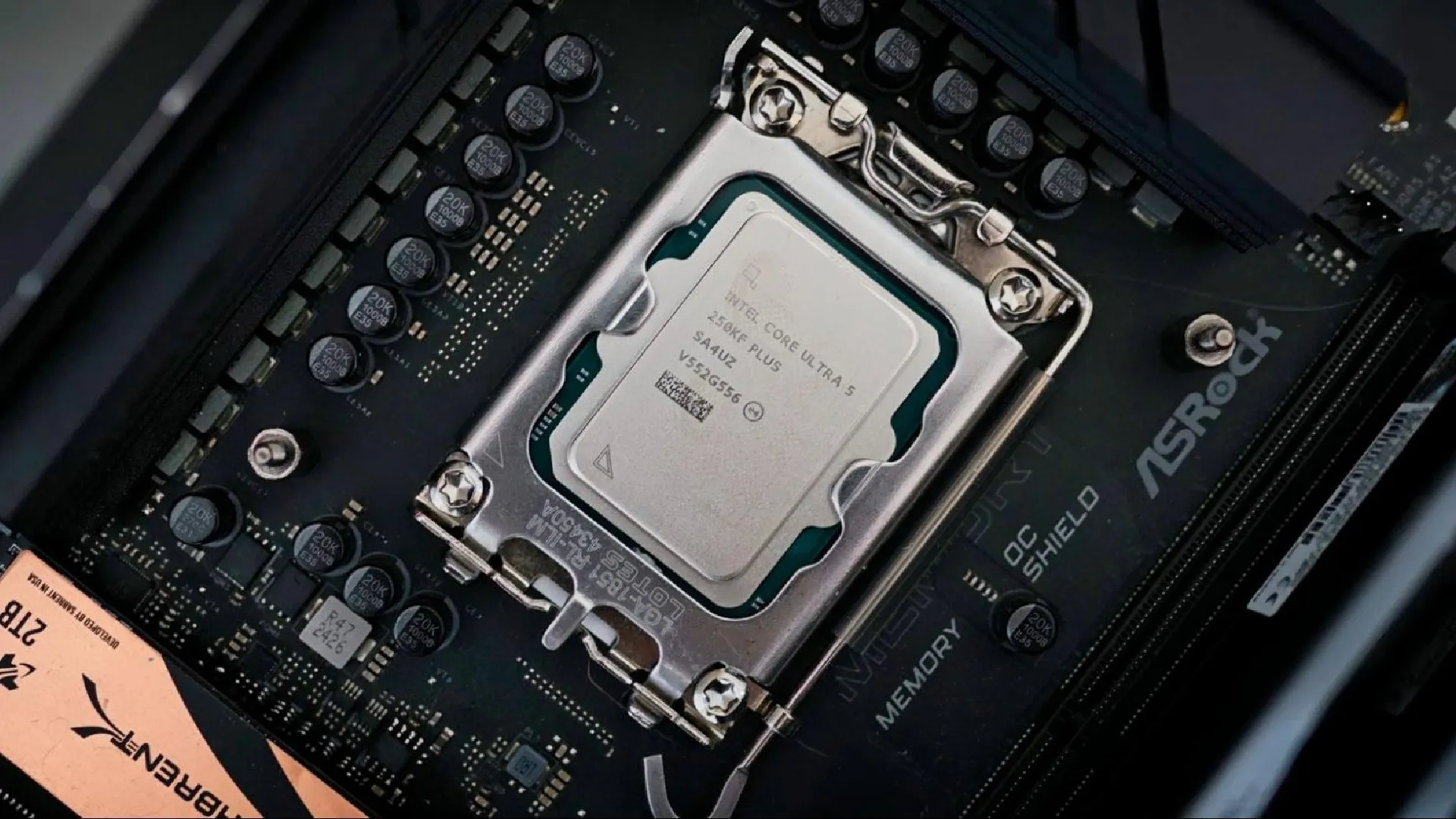
Intel's potent 18-core Core Ultra 5 250KF Plus CPU lands at retail for under $200
Intel's chip matches the same-price AMD parts in gaming and whomps them in multi-threaded work.
Casual hardware enthusiasts and folks on the periphery of the hobby may have heard some buzz around Intel's new Arrow Lake Refresh processors, and now the iGPU-less Intel Core Ultra 5 250KF Plus is available for a cool $199, while the full-featured Intel Core Ultra 5 250K Plus is $215. Look, it's not just that the Core Ultra 200S "Plus" processors are that much better than the original recipe (and they are better); rather, it's simply that Arrow Lake was never that bad to begin with. Now that Intel has cut pricing on its processors, the Core Ultra 7 270K Plus and Core Ultra 5 250K Plus are looking downright attractive, especially now that the Core Ultra 5 250K Plus is down to $199 at Newegg.
Technically, that's still over the MSR—err, sorry, Recommended Customer Price of $184, but it's the closest any of the new parts have come to their RCP. The buzz around Intel's latest CPUs has been positive enough that demand may have outstripped supply, and so the high-end Core Ultra 7 270K Plus (which is faster than the Core Ultra 9 285K in a lot of situations) is already out of stock in some stores, while the Core Ultra 5 250K Plus is going for some $20 over its suggested price.
So it goes that we have the Core Ultra 5 250KF Plus, which is identical to the 250K, just without the integrated GPU. That's a very slight bummer even for those intending to use powerful discrete gaming GPUs, as it can be handy for troubleshooting (or allowing you to continue using your PC when that big GPU melts its power connector and needs an RMA), but ultimately, the integrated GPU is just inactive silicon in most PC gamers' rigs.
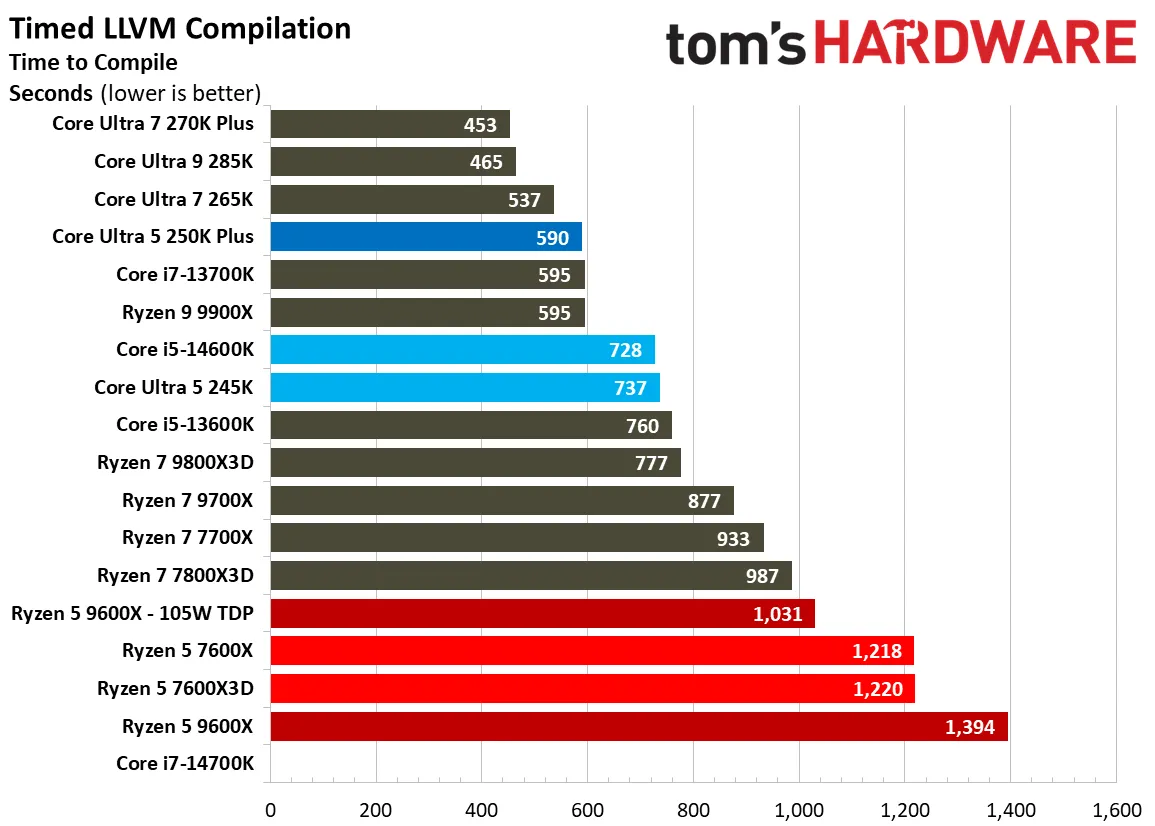
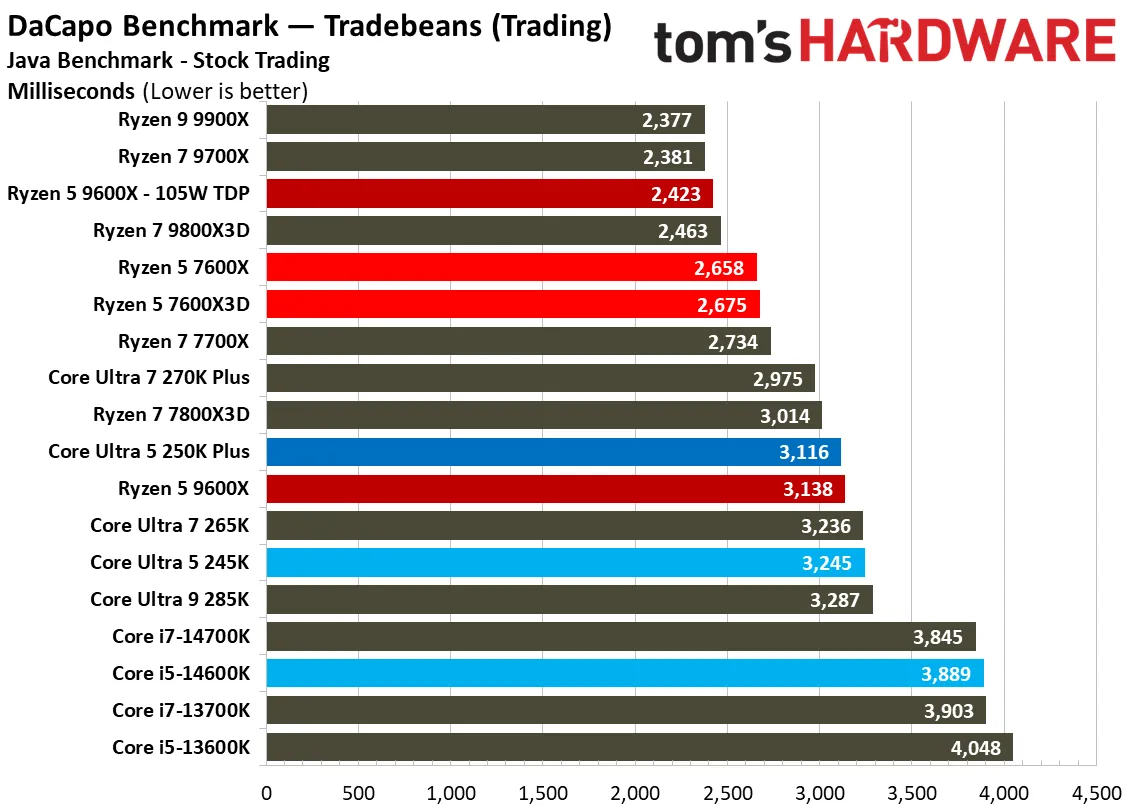
AMD does hold the gaming crown in some price bands, but the truth is, there are plenty of PC gamers out there who are all-around power users who make use of their PCs for a lot more than playing video games. You can buy a Core Ultra 5 250KF Plus for $199 and enjoy the multitasking horsepower of eighteen CPU cores cranking at up to 5.3 GHz, or for the same price, you can pick up a Ryzen 5 9600X, with a whopping six cores. The comparison isn't even salient for multi-core workloads and multi-tasking usage, and in fact, the Intel chip usually wins in gaming against the 9600X anyway.
That's right: AMD's Ryzen processors with 3D V-Cache are dominant in gaming workloads, and the Core Ultra 200S Plus series doesn't change that. However, 3D V-Cache processors basically start at $350 with the Ryzen 7 7800X3D outside of some Micro Center doorbusters. That's a brilliant processor, don't get me wrong, and the gaming performance is still a full step ahead of the Intel parts. If you're not gaming in a low resolution (like 1080p) with something like a GeForce RTX 4080 or Radeon RX 9070 XT, though, you'll likely never notice the difference anyway—certainly not the way you'll notice 65% faster render times in HandBrake or 57% faster code compiles.


There are a few caveats with the newer chips; you'll want the fastest RAM you can afford to throw at the chip (ideally 7200 MT/s or better, although anything will work), and you'll also need to install Intel's Platform Performance Package to get the Application Performance Optimization and Binary Optimization Tool. Fortunately, Intel has made that latter part a one-step process with an all-in-one package instead of requiring users to separately install packages for DTT, PTT, APO, and various other three-letter acronyms.
We can't imagine the new Arrow Lake Refresh processors are any less expensive for Intel to fabricate and package, so the company is likely taking a bath on its margins to move these chips. That doesn't matter much to the end-users, though; thanks to Intel's generosity (or desperation), you can pick up a seriously potent 18-core processor for just two-hundred bucks. It's a whole different world from just a few years ago, when Intel's top-end CPU for $539 had a measly eight cores while AMD was shipping 16-core behemoths.
Get Tom's Hardware's best news and in-depth reviews, straight to your inbox.
Follow Tom's Hardware on Google News, or add us as a preferred source, to get our latest news, analysis, & reviews in your feeds.


Zak is a freelance contributor to Tom's Hardware with decades of PC benchmarking experience who has also written for HotHardware and The Tech Report. A modern-day Renaissance man, he may not be an expert on anything, but he knows just a little about nearly everything.
-
usertests $199.99999 is under $200.Reply
But the 250K which should be $200 is more like $220. And the 270K is $350. -
cutecumber But at the end of the day, arrow lake is a dead end, meaning you cannot upgrade your cpu unless you buy a new motherboard. Also I want to see results of a 9950x3D against everything else too, because that usually would show the good of both gaming and productivity.Reply -
JayNor What are the cost advantages of using multi-process chiplets and their own advanced packaging?Reply -
TerryLaze Reply
But at the end of the day nobody cares, families buy a PC and keep it until it falls apart or doesn't do basic things anymore.cutecumber said:But at the end of the day, arrow lake is a dead end, meaning you cannot upgrade your cpu unless you buy a new motherboard. -
readthespecsheetplease Replyenjoy the multitasking horsepower of eighteen CPU cores cranking at 5.3 GHz, or for the same price, you can pick up a Ryzen 5 9600X, with a whopping six cores
Okay, but only six of those cores can boost to 5.3 GHz. Where are the other 12 P-cores coming from? -
Suburbazine Reply
Imaginary, considering the author spent so much time glazing Intel without even knowing what P and E cores are.readthespecsheetplease said:Okay, but only six of those cores can boost to 5.3 GHz. Where are the other 12 P-cores coming from?
I expect this writing from Wired, not TH. -
mikeebb Reply
This. I resemble the remark, with the tower still boasting a i5-10400F and RTX3060. And 32G DDR4. With all of that and a couple of SSDs (and a couple of internal HDs, it is adequately speedy (not used for significant gaming). Did have to recently replace the p/s though. Funny that the laptop (a Lenovo Flex flippy, 11th-gen i7) is actually not noticeably faster unless running something that's very CPU-bound (but not using much RAM - only 8G and not expandable). Frankly, I don't plan on replacing either of them in the near future.TerryLaze said:But at the end of the day nobody cares, families buy a PC and keep it until it falls apart or doesn't do basic things anymore.
At current RAM and other prices, I REALLY don't plan on replacing anything until it dies, regardless of how "good" a new CPU might be (again, my use does not involve significant gaming). If MS decides to stop supporting Win 11 on 10-11th gen, well, I have Linux too... -
ATIRAGEPROTURBO Reply
Come on fellas, let's not jump straight from "the author made an overstatement while tired and stressed" to "the author is an incompetent Intel shill who doesn't know the difference between P- and E-cores." I'm willing to give him the benefit of the doubt considering the author is, well, me. :)Suburbazine said:Imaginary, considering the author spent so much time glazing Intel without even knowing what P and E cores are.
I expect this writing from Wired, not TH.
Anyway, thanks for pointing out the error; it has since been addressed. -
readthespecsheetplease Reply
I'm happy to give benefit of the doubt but it has not been addressed.ATIRAGEPROTURBO said:Anyway, thanks for pointing out the error; it has since been addressed.
"enjoy the multitasking horsepower of eighteen CPU cores cranking at up to 5.3 GHz, or for the same price, you can pick up a Ryzen 5 9600X, with a whopping six cores."
This is pretty vague language for no reason. 12 of the cores in the product being described cannot reach 5.3 GHz. Then to immediately compare the product core count within the same sentence is frankly misleading.
Just separate the two points. Two sentences. Here, its easy:
You can buy a Core Ultra 5 250KF Plus for $199 and enjoy the multitasking horsepower of 6 P-cores cranking at up to 5.3 GHz. Plus, you get an additional 12 E-cores for the same price as a Ryzen 5 9600X, with only a total six cores at a comparable 5.4GHZ.
Its easy to not switch the metric by which you are evaluating a product mid sentence, kindly avoid this rhetorical ambiguity if you wish to appear impartial. -
ATIRAGEPROTURBO Reply
Nah, you're being nitpicky. The CPU cores do in fact clock up to 5.3 GHz. There's no specific need to get into the weeds of which cores do what. If we were talking about a review or something where we were doing a comparison of data, then sure. For a deal post? What's the point?readthespecsheetplease said:I'm happy to give benefit of the doubt but it has not been addressed.
"enjoy the multitasking horsepower of eighteen CPU cores cranking at up to 5.3 GHz, or for the same price, you can pick up a Ryzen 5 9600X, with a whopping six cores."
This is pretty vague language for no reason. 12 of the cores in the product being described cannot reach 5.3 GHz. Then to immediately compare the product core count within the same sentence is frankly misleading.
Just separate the two points. Two sentences. Here, its easy:
You can buy a Core Ultra 5 250KF Plus for $199 and enjoy the multitasking horsepower of 6 P-cores cranking at up to 5.3 GHz. Plus, you get an additional 12 E-cores for the same price as a Ryzen 5 9600X, with only a total six cores at a comparable 5.4GHZ.
Its easy to not switch the metric by which you are evaluating a product mid sentence, kindly avoid this rhetorical ambiguity if you wish to appear impartial.
I get that you don't like Intel, but you can check our review yourself to see that the 18-core chip does indeed absolutely body the similarly priced 6-core chip (and 8-core chips) despite some of its cores being E-cores that don't clock that high. I don't think it warrants cluttering up the text to make an extremely specific and hair-splitting delineation like this.