Don't wait if you're planning to upgrade your RAM or SSD, Kingston rep warns — says 'prices will continue to go up,' NAND costs up 246%
"It’s bad, and it’s getting worse right now."
Kingston Datacenter SSD Business Manager Cameron Crandall said in an interview that NAND prices for RAM and SSD are expected to rise throughout 2026. The Kingston employee said on The Full Nerd Network podcast that NAND prices increased by 246% from 1Q25, 70% of that happening in just the last 60 days. And with this component making up 90% of the bill of materials for an SSD, the company will have to adjust its pricing accordingly.
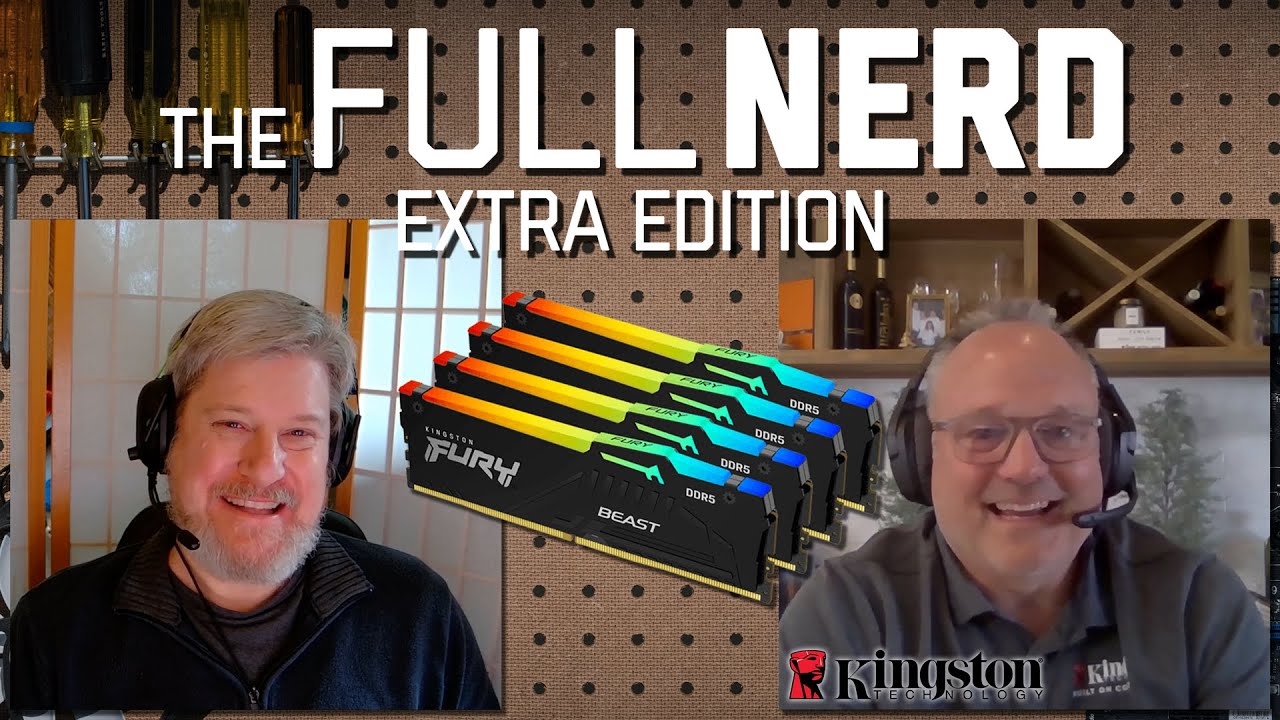
When asked how consumers could cope with the ongoing shortage and price hikes, Crandall said, “I think the best thing to do if you’re looking at upgrading your system is to do it now and not wait because prices are going to continue to go up.” He also added, “My advice today would be to not hold off on that purchase because it will be more expensive 30 days from now, and more likely it will be more expensive 30 days after that.” Crandall also stated that prices are increasing "like we've never seen" in 29 years of working at Kingston.
This contradicts Sapphire’s prediction that DRAM prices will stabilize within the next six to eight months, although Crandall says that the memory market has a pricing cycle and that we are in an upswing at the moment. It’s likely because of this that memory companies are holding back on expanding their production lines or building new fabs. After all, there is still the threat of the AI bubble that could leave chipmakers holding expensive NAND inventory with zero demand if it bursts.
Another question tackled during the episode is whether Kingston will follow in the footsteps of Micron and exit the consumer business. Thankfully, Crandall confirmed that Kingston is focused on the distribution channel and that the company, alongside other SSD and RAM suppliers, will take up the slack from the shutdown of Crucial.
In the end, Crandall hopes that the shortage doesn’t drag on too long. Although he does not believe that this pricing apocalypse would last a decade, as some suggest, he still says that pricing is not headed down anytime soon. So, if you’re on the market for memory or storage, he recommends that you get what you can right now.

Follow Tom's Hardware on Google News, or add us as a preferred source, to get our latest news, analysis, & reviews in your feeds.

Get Tom's Hardware's best news and in-depth reviews, straight to your inbox.

Jowi Morales is a tech enthusiast with years of experience working in the industry. He’s been writing with several tech publications since 2021, where he’s been interested in tech hardware and consumer electronics.
-
Dementoss "Don't wait"?Reply
I think not, after upgrading in May, no way whatsoever I am upgrading again soon. Sooner or later, the, as yet, apparently endless supply of money pouring in to AI, will start to dry up. Maybe then I'll think about upgrading. -
Notton Thankfully I can make do on RAM/SSD/HDD for a while.Reply
Though I did shelve a 6x4TB NVMe NAS build. -
AmirTHforum That’s a rather self‑serving suggestion. Encouraging people to buy RAM or SSDs unnecessarily only contributes to the current supply strain and drives prices even higher. A more prudent approach would be to wait as long as possible—perhaps even pausing non‑essential projects—so as not to further fuel the ongoing frenzy.Reply -
CelicaGT Pffft! I'll be waiting. Perhaps forever at this rate but I refuse to be fleeced by these bloodsuckers. It's my money and if they want it they'd better make it MORE attractive not less. FOMO is for the weak.Reply -
pug_s Reply
Sounds like someone wants to make the demand for ram/ssd worse.Dementoss said:"Don't wait"?
I think not, after upgrading in May, no way whatsoever I am upgrading again soon. Sooner or later, the, as yet, apparently endless supply of money pouring in to AI, will start to dry up. Maybe then I'll think about upgrading. -
Captain Awesome I was chatting with Gemini 3 about conventional hard drives, complaining that 8 TB drives are stuck at this price. It told me manufacturers don't care about that size anymore, because they're focused on larger drives for data centers now.Reply
So I'll never get my cheap 8TB drive, but in a few years I might get a reasonably priced 30-40 TB drive. 😃
I don't care if it's hallucinating or using bad rumors in its training data, I'm holding onto this happy thought. 😁 -
80251 When Crucial left the consumer market does that mean they're not selling RAM at all anymore? Or just not selling RAM to consumers? If they're still going to be manufacturing RAM kits why can't consumers buy them as well?Reply -
iguanac64 Reply
They'll continue to manufacture DRAM chips, but they won't be selling it to consumers. They'll be targeting high profit customers like AI Datacenters that are heavily consuming memory supply. DRAM stick assembling companies like Corsair, G.Skill, AData, etc will get what's left over to sell to the consumer.80251 said:When Crucial left the consumer market does that mean they're not selling RAM at all anymore? Or just not selling RAM to consumers? If they're still going to be manufacturing RAM kits why can't consumers buy them as well?
There are only three large DRAM manufacturers (Micron (Crucial), SK Hynix, and Samsung). The only real option that might help the consumer is if the smaller Chinese DRAM manufacturers like Winbond, Nanya, and Chanxing (I think is the right name) invest in improving their facilities to crank out more memory. They're not used to competing in the higher end DRAM market that the big three play in. -
thestryker Storage prices have been going up for about as long as DRAM prices, but the difference is that it hasn't been a sharp rise. I think generally speaking that's due to the longevity of storage and the ability to just swap it between systems whereas if you're building a new system and say only have DDR4 you don't have a choice but to buy DDR5.Reply
I suspect the storage situation is going to be worse for longer since even if the AI bubble bursts that's not going away. The last good sales for the next couple of years on storage probably were this holiday.
Crucial as a company will no longer exist and it was the consumer arm of Micron. Micron doesn't sell to the general market at all even though they make SSDs and various memory products. I've assumed the move to kill Crucial was more about reducing headcount and overhead than anything to do with manufacturing.80251 said:When Crucial left the consumer market does that mean they're not selling RAM at all anymore? Or just not selling RAM to consumers? If they're still going to be manufacturing RAM kits why can't consumers buy them as well?
Consumer HDD pricing is relatively static when you look at a $/GB except on the very high capacities as they hit the market. There really isn't a good way to make HDDs cheaper and the consumer market has basically collapsed over the last decade which undoubtedly is part of it.Captain Awesome said:So I'll never get my cheap 8TB drive, but in a few years I might get a reasonably priced 30-40 TB drive. -
palladin9479 It's the Fab wafer allocation limits. Each company reserves only so many wafers and process capacity and wants to maximize the profit from that and with the massive datacenter demand that means enterprise products. Enterprise products usually sell for 4~10x the price of the consumer version doesn't cost nearly that much to manufacture. In the past companies would split the capacity between the two but not with enterprise at ridiculous demand levels, executives are choosing to maximize production on the enterprise products.Reply