Floating Point Calculation Performance
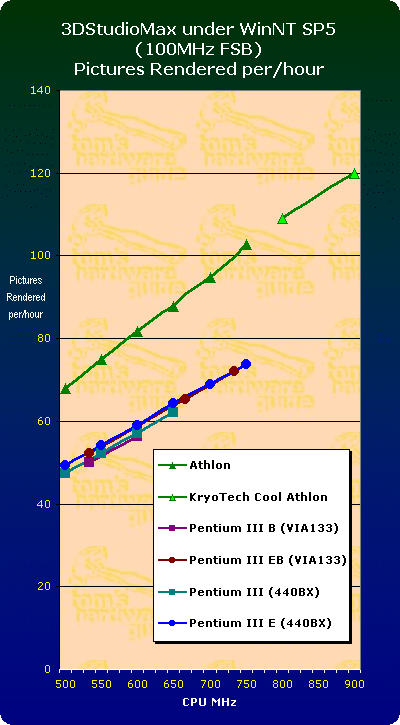
Swipe to scroll horizontally
| 3DStudioMAX - WindowsNT4 | Header Cell - Column 1 | Header Cell - Column 2 | (Pictures Rendered per/hour) | Header Cell - Column 4 |
|---|---|---|---|---|
| CPU | PR/h | Row 0 - Cell 2 | CPU | PR/h |
| Pentium III 500 | 47 | Row 1 - Cell 2 | Athlon 500 | 68 |
| Pentium III 500E | 49 | Row 2 - Cell 2 | Row 2 - Cell 3 | Row 2 - Cell 4 |
| Pentium III 533B | 50 | Row 3 - Cell 2 | Row 3 - Cell 3 | Row 3 - Cell 4 |
| Pentium III 533EB | 52 | Row 4 - Cell 2 | Row 4 - Cell 3 | Row 4 - Cell 4 |
| Pentium III 550 | 52 | Row 5 - Cell 2 | Athlon 550 | 75 |
| Pentium III 550E | 54 | Row 6 - Cell 2 | Row 6 - Cell 3 | Row 6 - Cell 4 |
| Pentium III 600 | 57 | Row 7 - Cell 2 | Athlon 600 | 82 |
| Pentium III 600B | 56 | Row 8 - Cell 2 | Row 8 - Cell 3 | Row 8 - Cell 4 |
| Pentium III 600E | 59 | Row 9 - Cell 2 | Row 9 - Cell 3 | Row 9 - Cell 4 |
| Pentium III 600EB | 59 | Row 10 - Cell 2 | Row 10 - Cell 3 | Row 10 - Cell 4 |
| Pentium III 650 | 64 | Row 11 - Cell 2 | Athlon 650 | 88 |
| Pentium III 667 | 65 | Row 12 - Cell 2 | Row 12 - Cell 3 | Row 12 - Cell 4 |
| Pentium III 700 | 69 | Row 13 - Cell 2 | Athlon 700 | 95 |
| Pentium III 733 | 72 | Row 14 - Cell 2 | Row 14 - Cell 3 | Row 14 - Cell 4 |
| Pentium III 750 (overclocked) | 74 | Row 15 - Cell 2 | Athlon 750 (overclocked) | 103 |
| Row 16 - Cell 0 | Row 16 - Cell 1 | Row 16 - Cell 2 | Kryotech Cool Athlon 800 | 109 |
| Row 17 - Cell 0 | Row 17 - Cell 1 | Row 17 - Cell 2 | Kryotech Cool Athlon 900 | 120 |
Not much has changed in the pure floating point performance from Katmai to Coppermine. Athlon is still way ahead of its pursuers from Intel. Coppermine hasn't got the slightest chance. If you need to run a lot of rendering or other floating point intensive software, Athlon is the only sensible choice.
TOPICS