Linux developers are using AI vibe coding to keep vintage AMD GPUs alive — R600 driver cleaned up with GitHub Copilot gives HD 2000 to HD 6000 series a new lease of life
AI is now being used to help maintain Linux kernel drivers
AI-assisted coding (or vibe coding) has infiltrated Linux driver maintenance, with Linux developers now using LLMs to help maintain old drivers in the Linux kernel. Phoronix reports that GitHub Copilot was used to clean up code pertaining to vintage AMD R6000 Linux graphics drivers, helping keep the driver relevant for people still using these late 2000s-era GPUs.
Specifically, the R600 Gallium3D driver saw 59 commits by Gert Wollny, all aimed at cleaning up shader compiler code in the driver. The refactoring process was done with Copilot, with notes in each commit citing Copilot in auto mode being used to help build the code.
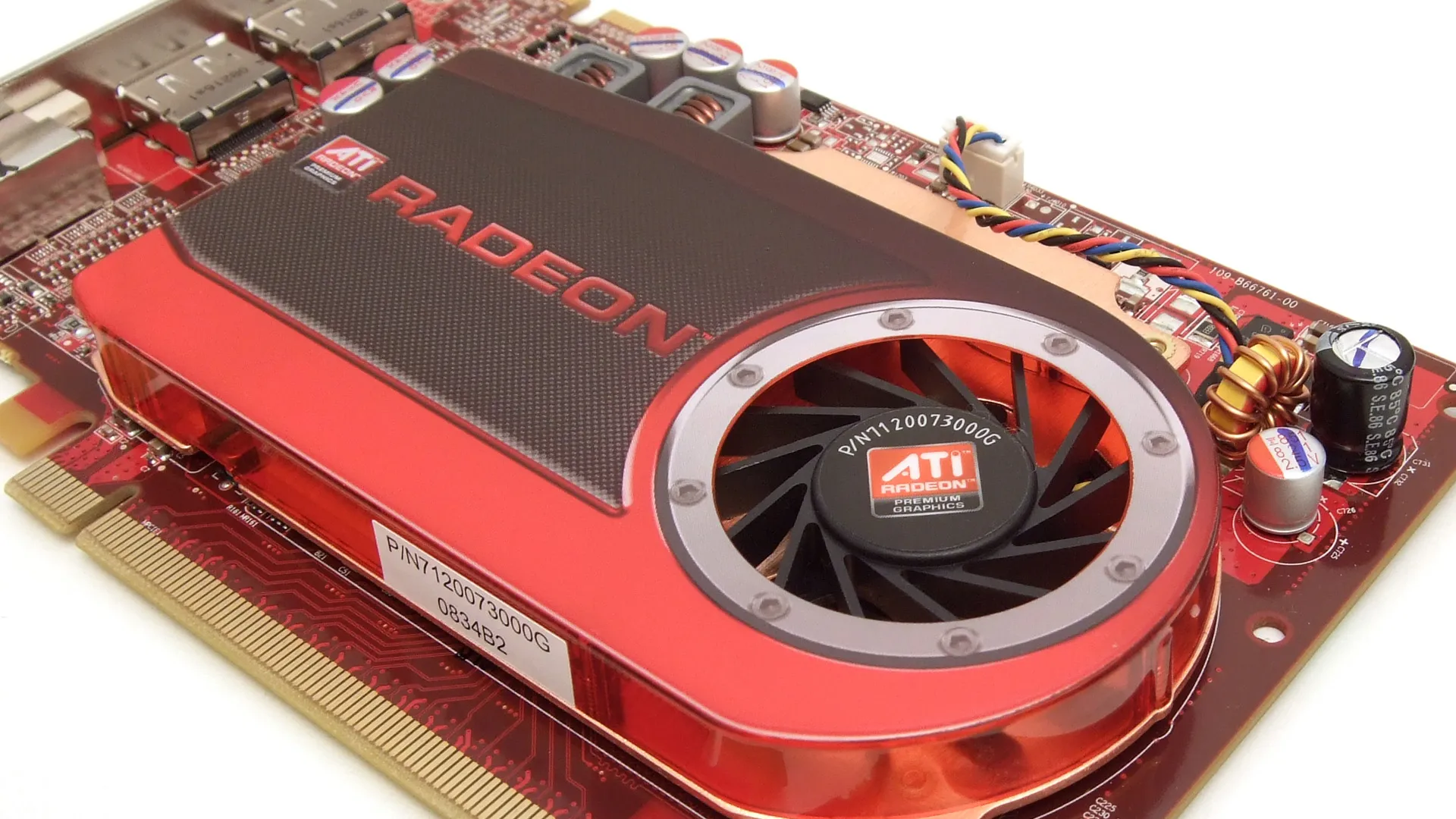
This method of driver maintenance will inevitably become a staple of Linux driver maintainers moving forward, as the world adopts AI over human programmers for writing the vast majority of code written today. The Linux community often only has a handful or a single person updating these older drivers, making AI a very incentivizing tool to compensate for a lack of manpower and help keep these older drivers alive. The R600 Linux driver is designed to run the AMD/ATI HD 2000 through HD 6000 series of graphics cards. The HD 2000 series debuted in 2007, and the HD 6000 debuted in 2010, making some of these graphics cards nearly 20 years old.
Rather than rejecting AI, Linus Torvalds has opted to embrace the adoption of AI and allow Linux developers to use AI, but only when appropriate. A new policy enforces proper tagging if Linux kernel developers use AI to assist in code creation. Critically, this system puts the blame for any buggy code on the person publishing kernel driver changes, requiring the person to test their work before publishing.
Despite the use of AI, Linux developers are, regardless, discussing branching off the R600 drivers into a legacy branch dubbed “Amber2”. This would free up the main Mesa codebase and prevent legacy drivers from accidentally breaking as new features are added to Mesa.

Follow Tom's Hardware on Google News, or add us as a preferred source, to get our latest news, analysis, & reviews in your feeds.

Get Tom's Hardware's best news and in-depth reviews, straight to your inbox.

Aaron Klotz is a contributing writer for Tom’s Hardware, covering news related to computer hardware such as CPUs, and graphics cards.
-
bit_user This probably doesn't qualify as vibe coding. The author of the changes is an experienced Mesa developer and the mere use of AI in some part of the work doesn't tell us what the level of involvement was.Reply
Vibe coding is a typically used to describe where someone is programming without a detailed understanding of the code they're either writing or modifying, and merely giving AI general guidance about what it is they want to accomplish. Through an iterative process, it's usually possible to get a result that basically works, but the resulting code usually isn't pretty and certainly not up to Mesa's standards.
You can see for yourself that all of the commits have the same boilerplate tags, so I'm not even sure if Copilot was involved in each one.
https://gitlab.freedesktop.org/mesa/mesa/-/merge_requests/41945
It's also worth noting that this didn't involve Linux kernel code being modified. It's part of the Mesa stack, which resides in userspace and has a codebase that's distinct from the Linux kernel.
This seems like sensationalizing, to me. Phoronix did not characterize this as vibe coding and he doesn't shy away from the term, when it's appropriate. I think the article's author should stick to covering areas he's more familiar with, or at least do more digging in cases where he ventures outside his realm of expertise. -
LordVile What’s the point exactly? If you’re using hardware that old you’ll likely want be using an older OS, offline of course.Reply -
bit_user Reply
Eh, sometimes you just want to throw a graphics card in a machine for local console access, but you don't need it to be terribly fast or fancy.LordVile said:What’s the point exactly? If you’re using hardware that old you’ll likely want be using an older OS, offline of course.
For a long time, I had used a Radeon HD 5450 in a server that was mostly headless. The only reason I stopped using it is because I upgraded the monitor and its DVI/HDMI ports couldn't support more than 1080p. Even then, I could've kept using it, but I decided to swap in a RX 550 that I also had lying around. The newer card burns a little more power, but that machine doesn't stay on most of the time, so it's okay. -
mitch074 Reply
This driver also covers integrated GPUs - while Linux can do with a simple VESA driver, any form of hardware accelerated rendering can be useful for a desktop machine. If your old living room PC has no slot for a discrete GPU and your AMD A10-6800K is still convenient enough, this is the driver you're using. It's from 2013, thus not THAT old.LordVile said:What’s the point exactly? If you’re using hardware that old you’ll likely want be using an older OS, offline of course.
Of course, anything using GCN or more recent would be better, but then it's a different driver still under active development where R600 is merely under maintenance - finding a way to keep it usable and not impeding Mesa development on the cheap is welcome. -
mitch074 Reply
This - I have an old, old test PC that has discrete GCN1 graphics, but when I need to debug it, its integrated GPU is Terascale-based. Having a working driver for it is useful for debugging.bit_user said:Eh, sometimes you just want to throw a graphics card in a machine for local console access, but you don't need it to be terribly fast or fancy.
For a long time, I had used a Radeon HD 5450 in a server that was mostly headless. The only reason I stopped using it is because I upgraded the monitor and its DVI/HDMI ports couldn't support more than 1080p. Even then, I could've kept using it, but I decided to swap in a RX 550 that I also had lying around. The newer card burns a little more power, but that machine doesn't stay on most of the time, so it's okay.
The fact that Terascale doesn't have any Vulkan support (and seemingly, can't have any) does doom it eventually, but as long as its driver is maintained, we still get OpenGL 3.3-4.5 (4.6 soonish, according to mesamatrix.net) on it.
Yeah, the latter ones can actually run Doom 2016. -
ezst036 Reply
No.LordVile said:What’s the point exactly? If you’re using hardware that old you’ll likely want be using an older OS, offline of course.
You should not be relegated to an older OS just because of using aging hardware. These cards are plenty capable for routine desktop usage.
That kind of thinking was born of the corporatists such as Apple and Microsoft with their forced absolescences. That kind of thinking is entirely outmoded and its a zombie husk making an appearance here. -
LordVile Reply
Not really. For the performance they have noe a default driver isn’t really going to make that much difference eitherezst036 said:No.
You should not be relegated to an older OS just because of using aging hardware. These cards are plenty capable for routine desktop usage.
That kind of thinking was born of the corporatists such as Apple and Microsoft with their forced absolescences. That kind of thinking is entirely outmoded and its a zombie husk making an appearance here. -
ezst036 Reply
That's some steep corporate-think there.LordVile said:Not really. For the performance they have noe a default driver isn’t really going to make that much difference either
This driver isn't some default driver to achieve "the basics" in terms of what drivers may do. It's the fully featured driver that AMD put massive amounts of developer hours into creating something relatively great for that particular generation/s during the time when these cards were current gen. -
FoxtrotMichael-1 Reply
Yes, let's make sure that all of our old computers live in a landfill, as is right and just, so that we can continue to give our hard-earned dollars to corporations every year for the bleeding edge.LordVile said:What’s the point exactly? If you’re using hardware that old you’ll likely want be using an older OS, offline of course.
I still use an iMac G3, by the way. I also have a Dell Optiplex with Windows XP connected to the internet. I am a software developer, understand security very well, and still find it fun to play with these old machines. Use your imagination for once and imagine that other people actually do interesting things. -
LordVile Reply
I mean you don’t have to use 16 year old hardware or a 5090. There are other options.FoxtrotMichael-1 said:Yes, let's make sure that all of our old computers live in a landfill, as is right and just, so that we can continue to give our hard-earned dollars to corporations every year for the bleeding edge.
Play around with not use as a main machine for actual workFoxtrotMichael-1 said:
I still use an iMac G3, by the way. I also have a Dell Optiplex with Windows XP connected to the internet. I am a software developer, understand security very well, and still find it fun to play with these old machines. Use your imagination for once and imagine that other people actually do interesting things.