Microsoft staunchly defends its new 'Low Latency Profile' for Windows 11 after community backlash — says every other OS already boosts CPU speeds for quicker load times
The quest to fix Windows 11 is a bumpy one.
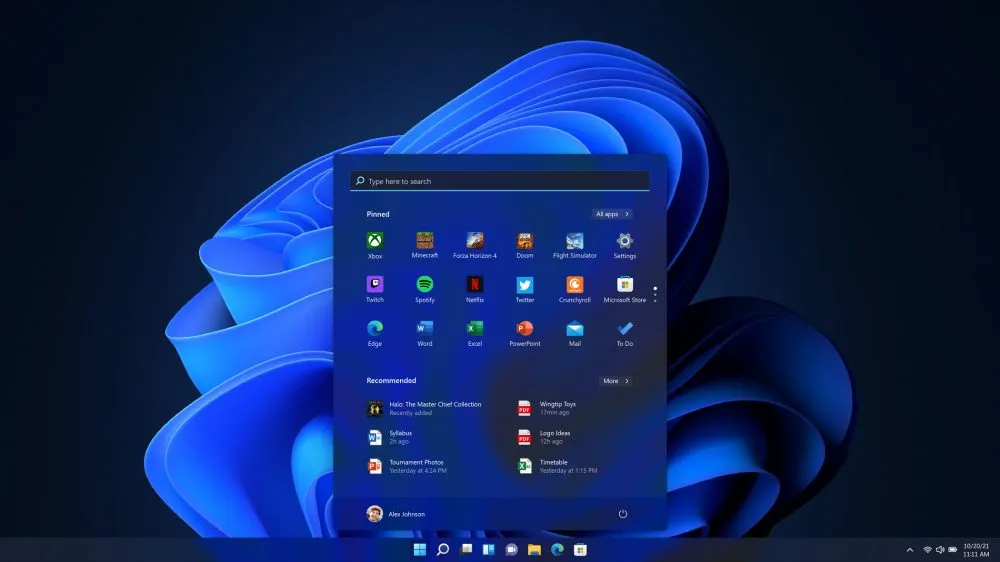
Last week, news of Microsoft working on a new "Low Latency Profile" for Windows 11 was leaked by Windows Central. When enabled, it would increase CPU clock speeds momentarily to improve app opening times. This was met with widespread backlash, with the community thrashing Microsoft for essentially putting on a Band-Aid instead of addressing underlying Windows performance issues. Since then, the company has stood firmly by the decision on social media, reminding users that it's simply catching up to industry practice.
Senior developer and VP Scott Hanselman replied to a lot of concerned users on X and compared other operating systems to Windows 11, highlighting that this boosting functionality isn't anything new. That's true; every modern OS, including the bastion of efficiency, Linux, and even smartphones, already have this implemented. He went on to claim that "this isn't cheating" and implies that such a solution works in tandem with optimizing apps and code in further replies.
Your smartphone already does this. Constantly. Every touch wakes cores, boosts clocks, renders a frame, then drops back to idle milliseconds later. You’ve discovered dynamic frequency scalingWelcome to modern computer science. Come on in! The water changes temperature often. https://t.co/peGdf6PcF1May 10, 2026
Todos los sistemas operativos modernos hacen esto, incluyendo macOS y Linux. No es “hacer trampa”; así es como los sistemas modernos hacen que las apps se sientan rápidas: suben temporalmente la velocidad del CPU y priorizan tareas interactivas para reducir la latencia https://t.co/kRSRMCB2MwMay 9, 2026
The Low Latency Profile (LLP) is part of Microsoft's broader "Windows K2" efforts to make Windows 11 smoother, more stable, and more efficient after years of sluggishness. As such, LLP works by boosting CPU frequencies for a quick assist in things like flyout delays for the Start Menu. Your CPU usage and clocks will spike for a fraction of a second to ensure the OS feels fast and responsive during those moments.
Think of it this way:Say a core runs 0.5W parked, 2.5W @ 800 MHz & 15W @ 4.5 GHz. If a task runs 1s @ 800MHz, & 0.1s @ 4.5GHz, over 1s, power draw will be:4.5 GHz = (15 W / 0.1s) + (0.5 W / 0.9s) = 1.95 W800 MHz = 2.5 WGrossly oversimplified, but that’s the gist of it.May 9, 2026
For all this to work on a technical level, though, you do require pretty aggressive clock parking so the CPU's prepared to shift into gear the moment it's needed to speed up an OS interaction. This is also important for mobile devices with batteries, such as laptops or handhelds that might consume more power when their cores are being utilized at a minimum for longer, compared to just idling in C-state after a quick burst at max speeds.
People across social media continue to dunk on Scott's replies, asking why Microsoft needed to wait until Windows 11 was in an intolerable state to think of this solution. That's entirely fair, too, considering just how long users have been complaining about the general reliability of the OS. Even devs who formerly worked on Windows have called out Windows 11 for its underwhelming navigation performance.
There's also the argument that perhaps Microsoft needs to optimize the operating system on a much deeper level before applying superficial patches like this, given complaints about the amount of bloatware a stock copy of Windows 11 comes with. Microsoft has even resorted to making an Xbox Mode just so games can bypass the bloat and run better.
It seems like the company is slowly realizing that the AI push it's been hiding behind for a few years at this point just isn't working out the way it was expected. Just look at Xbox — even with a new CEO that literally comes from Microsoft's AI department, it's making community-first changes like never before.

Get Tom's Hardware's best news and in-depth reviews, straight to your inbox.
Follow Tom's Hardware on Google News, or add us as a preferred source, to get our latest news, analysis, & reviews in your feeds.

Hassam Nasir is a die-hard hardware enthusiast with years of experience as a tech editor and writer, focusing on detailed CPU comparisons and general hardware news. When he’s not working, you’ll find him bending tubes for his ever-evolving custom water-loop gaming rig or benchmarking the latest CPUs and GPUs just for fun.
-
ezst036 Reply
This.Admin said:People across social media continue to dunk on Scott's replies, asking why Microsoft needed to wait until Windows 11 was in an intolerable state to think of this solution. That's entirely fair, too, considering just how long users have been complaining about the general reliability of the OS.
The timing is absolutely the problem.
Microsoft, now, after all the years of ignoring and ignoring and ignoring its customers, is now finally doing things. The perception is that "the things" are simply too small in comparison to the massive amount of years where Microsoft has simply told all of us to go pound sand. With a smile on everybody's face, of course.
"Look. I gave you a Cheez It. One single Cheez It. You've been asking for years."
"Wait why are you unhappy?" -
Kindaian Just add a tape cassette sound when loading an app, and when the app fails to load show a load tape error :) Problem solved. And flicker the sides of the screen with colors very rapidly to create the visual effect of bars moving.Reply -
Toom316 I don't mind them doing this but it's an extremely small improvement overall. I mean the only time you will notice this boost is when nothing is going on already on your pc. If you have any other app open or a browser your your CPU is already boosted up out of its sleep / idle state. So this improvement is a very edge case at best. Cause most of the time when I used windows and opened the task bar I was already doing other stuff that's boosted the CPU anyways.Reply
So what bugs me is they sort of claim this as a big win when it's just a tiny small edge case and your not even going to notice it most of the time. -
Roland Of Gilead Replyreminding users that it's simply catching up to industry practice.
As opposed to being an industry leader, which MS claim to be! This is much ado about nothing.
As above, this will hardly yield any significant change in OS snappiness. It's not like it's an OC of a CPU, with specific parameters. -
das_stig OK too little too late, but at least Microsuck are doing something but it better be 100% stable and doesn't end up crashing systems tuned by the users to get the most out of their hardware.Reply
Said it many times, Windows 11 is a dead path, Microsoft need to go back to a tiny 64-Bit Core OS hypervisor, everything is then accessed as needed by a resource manager that only looks after, memory, storage, gpu, networks etc etc, handles who and what gets accessed or shared between other resource managers, no direct linking between resources for security. Legacy compatibility is scrapped, if its not native, it gets emulated, isolated and no data sharing, force developers to update to native. -
ezst036 Reply
Microsoft do claim this.Roland Of Gilead said:As opposed to being an industry leader, which MS claim to be
The disconnect has to be a factor. -
King_V Alright, they want to improve performance? I have the solution.Reply
Go back to Windows 10. Say its iteration from a few years back, but with all the security updates.
Stop adding gimmicks/features people don't want. I didn't ask for the weather on the login screen. I didn't ask for opening Edge to tell me about a lock-screen photo just because I wanted to say I liked it.
And I certainly didn't ask for Copilot as part of the OS.
Microsoft: do you remember when Windows 10 could actually run reasonably well on a spinning hard drive? Because I do. -
itsmejak78 Reply
Legacy compatibility is one of the ONLY good things about Windowsdas_stig said:OK too little too late, but at least Microsuck are doing something but it better be 100% stable and doesn't end up crashing systems tuned by the users to get the most out of their hardware.
Said it many times, Windows 11 is a dead path, Microsoft need to go back to a tiny 64-Bit Core OS hypervisor, everything is then accessed as needed by a resource manager that only looks after, memory, storage, gpu, networks etc etc, handles who and what gets accessed or shared between other resource managers, no direct linking between resources for security. Legacy compatibility is scrapped, if its not native, it gets emulated, isolated and no data sharing, force developers to update to native.
Scrapping it would be literally the stupidest move they could make -
itsmejak78 Reply
No, I don't remember when Windows 10 ran fine on spinning rust, because it ran like crap on HDDs even in 2015King_V said:Alright, they want to improve performance? I have the solution.
Go back to Windows 10. Say its iteration from a few years back, but with all the security updates.
Stop adding gimmicks/features people don't want. I didn't ask for the weather on the login screen. I didn't ask for opening Edge to tell me about a lock-screen photo just because I wanted to say I liked it.
And I certainly didn't ask for Copilot as part of the OS.
Microsoft: do you remember when Windows 10 could actually run reasonably well on a spinning hard drive? Because I do. -
King_V That was your experience. My experience was pretty good. It wasn't trying to do a million things at a time that required disk access back then.Reply