



Chinese chipmakers made record profit in 2025, despite slipping margins — U.S shipments fall 34% as Beijing shores up local chipmaking efforts
Domestic price competition is eroding profitability even as Beijing hits localization targets.
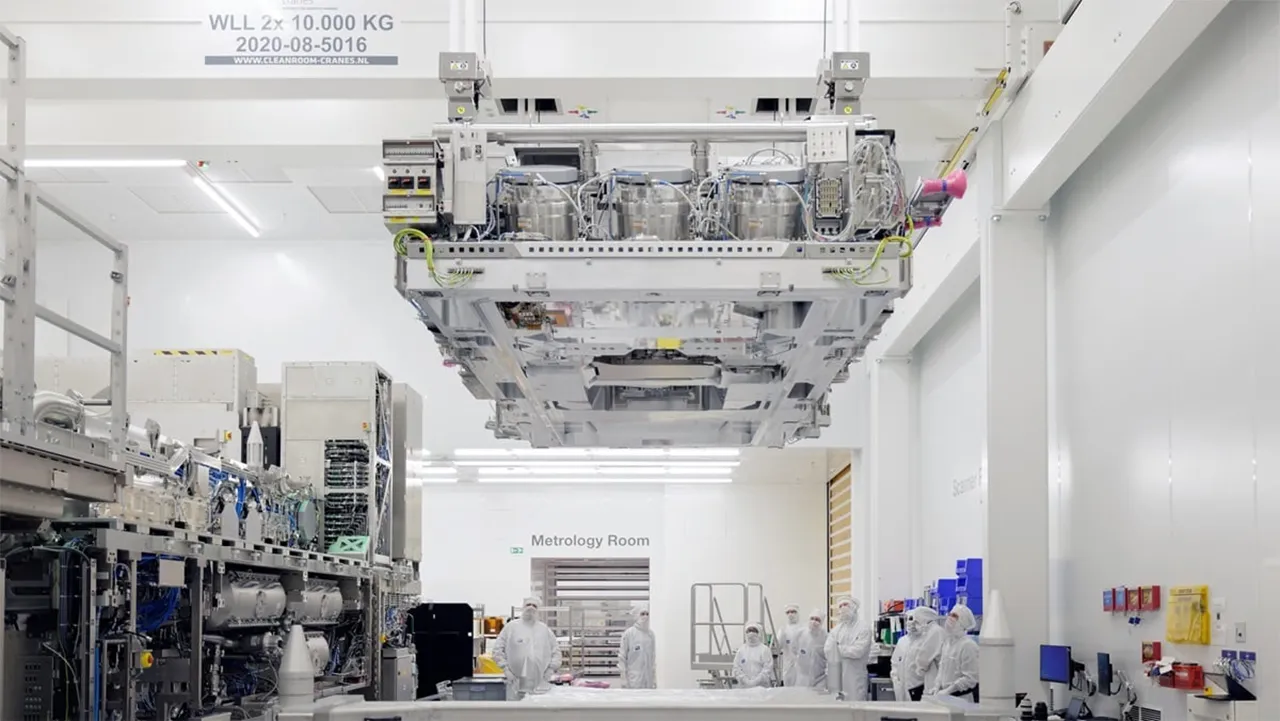
Applied Materials, Lam Research, and KLA booked a combined $19 billion in China revenue across their fiscal 2025 reporting periods, according to a recent Nikkei Asia analysis of corporate filings, even as direct U.S.-to-China tool shipments fell 34% to roughly $2 billion, the lowest figure since 2017.
The gap moved through Singapore and Malaysia, where all three firms have spent years building out manufacturing capacity. At the same time, every major Chinese wafer-fab-equipment vendor posted record 2025 revenues, but gross margins contracted across the board as domestic vendors competed on price for fab share previously held by foreign suppliers.
Domestic vendor financials
Naura Technology Group, China's broadest equipment supplier by product line, reported first-nine-months 2025 revenue of 27.14 billion yuan, up from 6.05 billion yuan ($887 million) for all of 2020, per Nikkei's analysis of company filings. Gross margin slipped 2.8 percentage points year over year to 41.4%, and net margin contracted by nearly four points.
AMEC delivered full-year 2025 revenue of 12.4 billion yuan, up 36.6% from 2024, but gross margin fell 1.9 points to 39.2%. In Q3 alone, AMEC's margin dropped 5.8 points. Piotech, a thin-film deposition specialist, nearly doubled revenue to 4.2 billion yuan in the first nine months, but first-half net income fell 27% as the company absorbed high costs from new products still in customer validation, per its interim filing.
ACM Research, the U.S.-listed company that conducts most of its operations through its Shanghai subsidiary, posted 2025 revenue of $901 million, a 15% increase, but gross margin fell 5.7 points to 44.4%, and operating margin collapsed from 19.3% to 12.1%. Q4 gross margin of 41% landed below the company's own 42% to 48% long-term target band.
"While leading domestic equipment companies are still posting strong revenue growth, there are indications that their margin performance is deteriorating," Charles Shi, a veteran semiconductor analyst with Needham & Co., told Nikkei Asia. Shi attributed the squeeze to domestic vendors undercutting each other for business at Chinese fabs that were previously served by foreign suppliers.
U.S. vendor China revenue
As for the revenue figures from U.S. equipment makers, it’s clear that export controls haven’t completely severed commercial relationships with China.
Applied Materials booked $8.53 billion of China revenue in fiscal 2025, or 30% of total sales, down from 37% the prior year, according to the company's Q4 FY2025 earnings release. CFO Brice Hill told analysts on the Q4 call that the cumulative impact of U.S. export restrictions was equivalent to roughly 10% of the China market in fiscal 2024 and more than double that in fiscal 2025. Meanwhile, Lam Research reported $6.21 billion from China for 34% of total revenue, down from 42%, while KLA reported $4.01 billion, or 33%, down from 43%.
These revenue figures, however, are largely attributable to infrastructure. Lam Research’s Batu Kawan campus in Penang, for example, is its largest manufacturing site globally at 800,000, while Applied Materials opened a $450 million plant in Singapore in early 2024 and has committed to doubling its local manufacturing and R&D headcount under a plan it calls Singapore 2030.
KLA completed the first phase of a $200 million Singapore expansion in October 2024, with a second phase underway that will bring the site to 420,000 square feet and add roughly 400 jobs, expected to be completed this year. Chinese customs recorded $5.7 billion of Singapore-origin chipmaking equipment in 2025, up more than 17%, and $3.4 billion from Malaysia, more than double the 2024 figure, according to Nikkei's analysis.
ASML's China share of net system sales fell from 41% in 2024 to 33% in 2025, though total China revenue as a share of all sales, including service, came in at 29.1%, per Nikkei's figures. ASML in January projected that the recent cycle was abnormally high and estimated China would drop to around 20% of ASML's 2026 revenue. Tokyo Electron, the most China-exposed of the large tool makers, drew
Tokyo Electron, the most China-exposed of the large tool makers, drew more than 40% of its fiscal 2025 revenue from Chinese customers, according to Nikkei's analysis. A TrendForce report from December cited TEL finance chief Hiroshi Kawamoto as expecting China's share to fall to around 35% in the current fiscal year, with uncertainty over whether it would drop below 30% the year after.
Over the five years from 2020 through 2025, China's accumulated chip tool imports from Japan exceeded $42 billion, with Netherlands-origin shipments adding roughly $35 billion, per Nikkei's customs data analysis.
Equipment localization clears 30%
Beijing is pushing hard to localize more chipmaking, but despite hundreds of billions spent and significant progress made, China is still around a decade behind the West. Domestic tools accounted for roughly 35% of chipmaking equipment in use at Chinese fabs in 2025, up from 25% in 2024 and above the government's 30% target for that year, according to DigiTimes.
It’s understood that the Chinese government is unofficially requiring chipmakers to source at least 50% domestic equipment when adding new capacity, with YMTC’s third Wuhan fab already having cleared that threshold.
Gains are naturally concentrating in the mature process tool categories, with Chinese vendors now routinely approaching or exceeding parity in cleaning, etch, deposition, and thermal processing. Lithography is the laggard, representing around 18% domestic share, metrology around 255, and EUV exposure tools at zero. Only ASML, Canon, and Nikon produce commercially viable lithography systems, an area where Chinese suppliers continue to face fundamental technical barriers.
U.S. lawmakers are keen to maintain that barrier, with the recent bipartisan Multilateral Alignment of Technology Controls on Hardware Act, targeting both DUV and the Southeast Asia routing pattern highlighted in Nikkei’s report. The bill adds restrictions on SMIC, CXMT, YMTC, Hua Hong, and Huawei directly into statute rather than relying on Commerce Department entity listings, and imposes country-wide prohibitions on sales and servicing of chokepoint tools into China regardless of end user.
A 150-day clock requires Commerce to secure matching controls from the Netherlands and Japan, failing which the bill authorizes an expanded Foreign Direct Product Rule applied unilaterally. Bernstein analysts called the proposal far stricter than any prior restriction, warning it could make tool maintenance inside Chinese fabs nearly impossible. The bill remains in committee and faces an uncertain path through Congress, as the Netherlands and Japan have not publicly committed to matching its scope.

Luke James is a freelance writer and journalist. Although his background is in legal, he has a personal interest in all things tech, especially hardware and microelectronics, and anything regulatory.