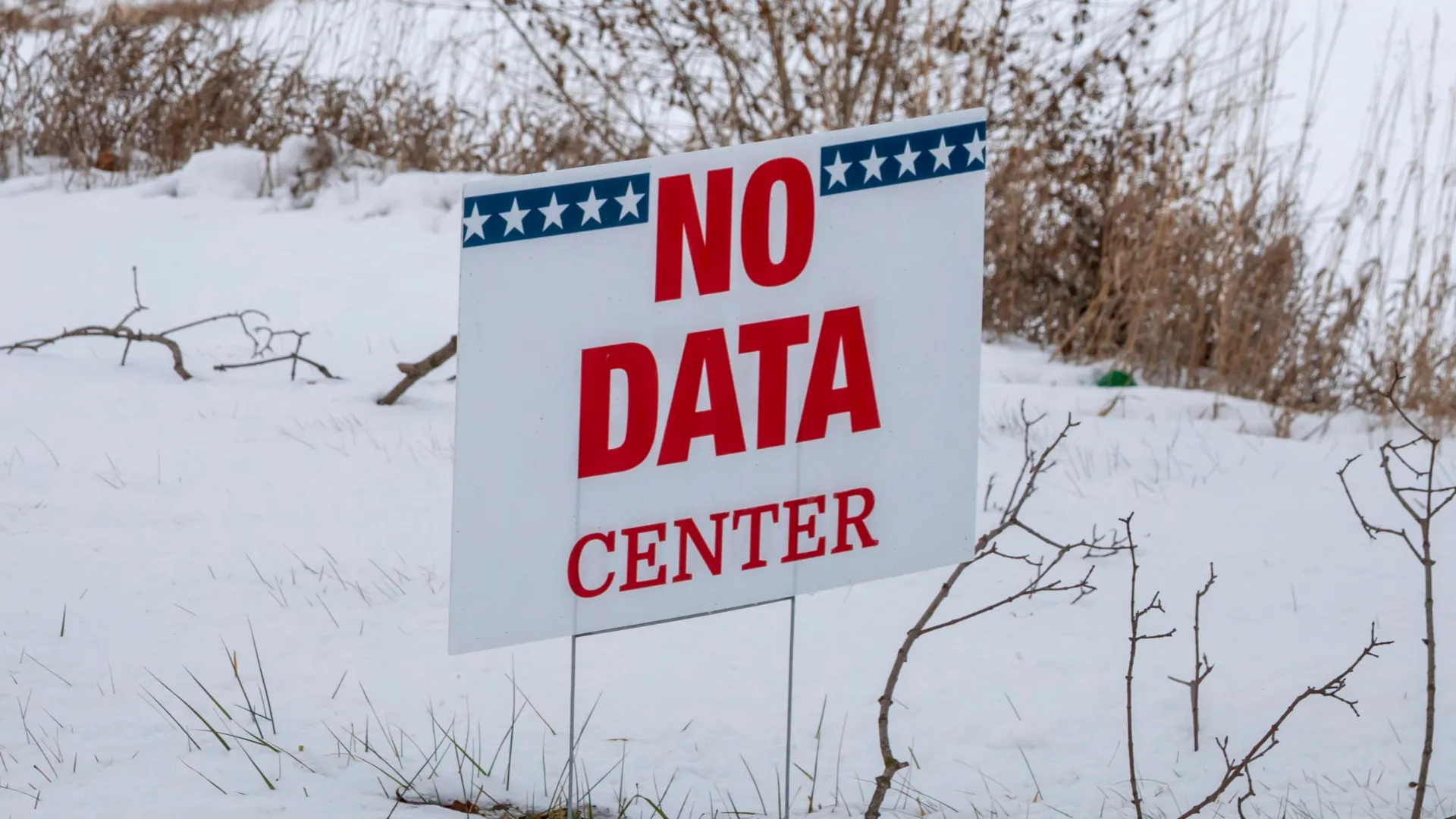
After a developer sued a township, OpenAI and Oracle's massive new Stargate data center, which will consume 1.4 Gigawatts of electricity, is now underway despite a township's vote to reject the new facility, sparking backlash. As a result, at least 19 Michigan municipalities have enacted moratoriums on new data center development since a $16 billion Stargate facility for Oracle and OpenAI was pushed through in Saline Township over near-unanimous local opposition last year, according to Bridge Michigan. The backlash now covers county resolutions, bipartisan state legislation, and a regional water authority refusing to serve proposed facilities.
The Saline project advanced despite a 4-1 vote by the township board to reject Related Digital's rezoning request in September. The developer sued within two days, alleging exclusionary zoning, and the township settled within weeks. Residents secured roughly $14 million in community benefits, including funding for the local fire department, farmland preservation, and environmental restrictions. “I think the plan was to move as fast as possible—so by the time anyone challenged it, they could say it was too far along to stop,” said one resident speaking to Forbes recently.
Michigan has since become a focal point for data center opposition. At least 19 municipalities across the state had enacted moratoriums on new data center development as of early February. Washtenaw County commissioners passed a resolution in March supporting local moratoriums, and bipartisan state legislation proposed a one-year statewide pause, though both Governor Whitmer and House Speaker Matt Hall have opposed that measure.

Related Digital and Blackstone announced last month that they secured financing for the Saline campus, purpose-built for Oracle as part of the Stargate AI infrastructure project with OpenAI. Its price tag has more than doubled from the $7 billion figure cited when it was first announced late last year, though there has been no explanation for the jump. Michigan Governor Gretchen Whitmer has called the project the largest single investment in state history.
The campus consists of three single-story data center buildings delivering more than a gigawatt of compute, with DTE Energy supplying roughly 1.4 GW of electricity using existing grid resources supplemented by battery storage funded entirely by Oracle. Related Digital says the arrangement will generate $300 million in savings for existing DTE ratepayers by spreading fixed grid maintenance costs across a larger customer base.
The facility will use a closed-loop cooling system rather than evaporative cooling, and Related Digital says ongoing water consumption will be comparable to a standard office building. The developer also claims that 750 of the roughly 1,000-acre site will be preserved as open space, farmland, and wetlands.
The Michigan Public Service Commission conditionally approved DTE's special contracts to service the facility in December, but the Michigan attorney general's office has appealed that decision. Construction began in November, and Related Digital says the project is on schedule for delivery to Oracle.
In April, the Ypsilanti Community Utilities Authority approved a 12-month moratorium on supplying water to data centers, blocking service to facilities including a proposed University of Michigan and Los Alamos National Laboratory supercomputing center. The City of Saline, which was sued by Related Digital in October, enacted its own 12-month moratorium in January.
Several additional AI data center projects are in the pipeline across southeast Michigan. Anthropic is the intended end user of a proposed hyperscale facility in Lyon Township, while Google is evaluating a one-gigawatt campus in Van Buren Township near Detroit Metropolitan Airport. Developers have identified at least 16 potential data center sites across 10 Michigan counties, Fortune reported.

Follow Tom's Hardware on Google News, or add us as a preferred source, to get our latest news, analysis, & reviews in your feeds.