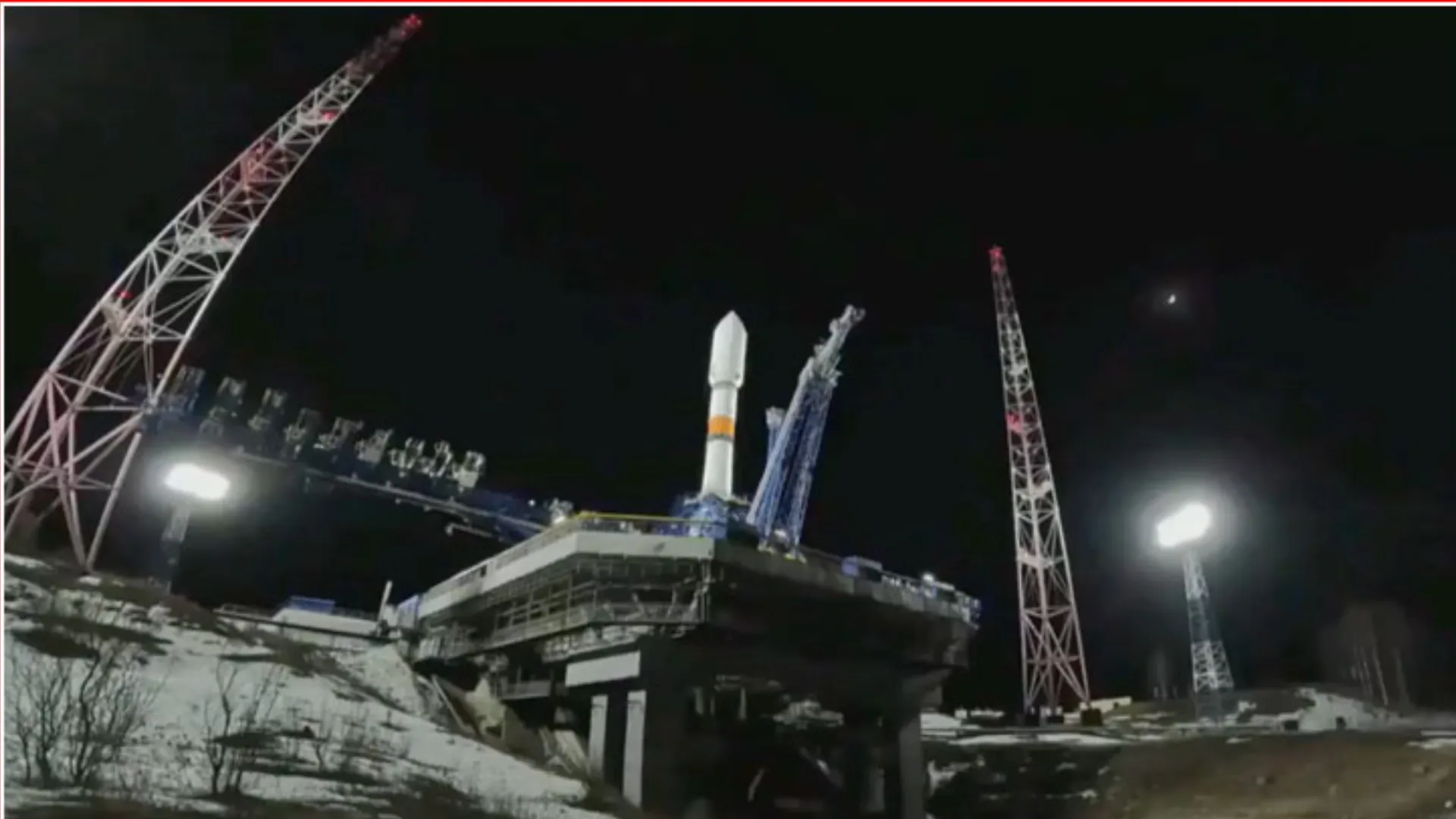
Object 4, one of 16 satellites in the first operational batch of Russia's Rassvet broadband network, re-entered Earth's atmosphere on approximately June 6th, according to orbital tracking compiled by space journalist Anatoly Zak at RussianSpaceWeb. The spacecraft launched on March 23rd from the Plesetsk Cosmodrome and is reportedly the only member of the batch that wasn’t able to perform a single orbit-raising maneuver, instead decaying out of a roughly 288km x 324km insertion orbit while six of its companions slowly climb and eight hold altitude.
Each Rassvet-3 satellite weighs about 370 kilos (816 pounds) and was released into a near-polar orbit inclined 82.3 degrees to the equator. For the first two weeks, none of the batch showed any propulsion activity, raising the prospect that the whole group had a problem. Object 16 (NORAD ID 68375) was the first to climb, on April 6th, with others following over the next several days. Object 4 (NORAD ID 68363) stayed flat throughout, losing altitude at the natural rate until re-entry became unavoidable. The cause of this is unconfirmed, but a dead propulsion system and a complete loss of ground control would both produce the same outcome.
At altitudes near 300km, residual atmosphere drags on a spacecraft hard enough that an unpowered satellite has an orbital life measured only in weeks. That’s why we see SpaceX deploying Starlink low before raising and actively maintaining each satellite's altitude, so a unit that fails on arrival deorbits itself quickly instead of becoming space debris.

Earlier this year, Starlink pulled more than 4,000 satellites down to a roughly 300-mile orbit after a near miss with a Chinese spacecraft, and dead Starlink units routinely re-enter within weeks of an anomaly. Object 4 followed that same disposal pathway; a satellite that cannot raise itself simply falls.
Meanwhile, Bureau 1440, the Moscow company building Rassvet, has a fraction of the hardware in orbit that it needs. When Russia's "Starlink rival" launched, the company set a target of 250 satellites by 2027 and around 900 by 2035, backed by roughly $1.26 billion in state funding.
The March launch, however, was unusual in that neither Roscosmos nor the Russian Defense Ministry announced it, with Zak reporting that a Ukrainian drone attack on Plesetsk around the launch window likely meant the Russian government was keen to keep things under wraps.
Bureau 1440 confirmed the mission only the next morning, with a video of the satellites separating from the upper stage, and said they had reached an initial orbit and come under its control ahead of planned testing and the transfer to a target altitude. Rumors are currently circulating about an unconfirmed report suggesting a second Rassvet launch planned for around June 18th.

Follow Tom's Hardware on Google News, or add us as a preferred source, to get our latest news, analysis, & reviews in your feeds.