A 10-year study indicates that treated surfaces turn yellow more severely than untreated plastic parts — retrobrighting does more harm than good to consoles
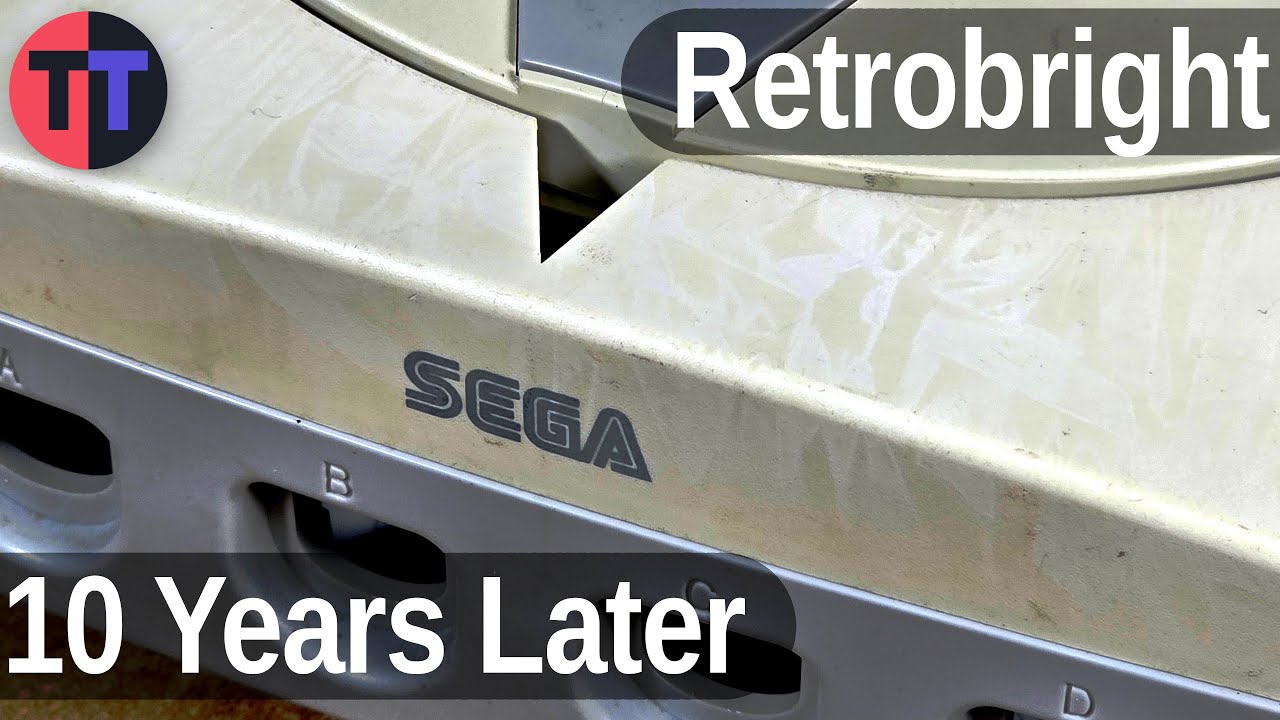
Retro and vintage tech YouTuber Tech Tangents, who goes by Shelby Jueden, showed on his channel the effects of retrobrighting after ten years on an old Sega Dreamcast. According to the YouTube video, he applied the classic hydrogen peroxide-and-sunlight method to the top and bottom cases of his old console (excluding the lid) way back in 2015, which had some effect on reducing the existing yellowing on the case at the time. He then left the entire thing disassembled on his shelf and only got around to it this year. This sort of accidental experiment showed that retrobrighting isn’t actually suitable for the console, with the non-treated surface appearing better after a decade.
Jueden says that retrobrighting is the process of reversing the natural yellowing that many plastic parts undergo over time. There are many different catalysts for this yellowing process. Still, he explains in the video that plastic parts tend to miscolor as the fire-retardant chemical in the material oxidizes, either through exposure to light, UV radiation, oxygen, temperature, and many other factors.
Some retro enthusiasts want to reverse this aging process by using various techniques. Aside from the one mentioned above, the video also mentioned the sous vide method, which heats a solution of Salon Care 40 Volume Clear Developer (which contains hydrogen peroxide) and water, and then applies it to the plastic part for treatment. It showed some promise in reversing some of the yellowing, but it still did not fully restore it to its original color. He also tried multiple experiments using ozone and UV light, but the results were either negligible or worse.
In the end, he said that while retrobrighting might temporarily reverse the yellowing on plastic parts, it does more harm than good. The treated surfaces showed signs of streaking and blotching, and, instead of correcting the imperfections, the bleach damaged the plastic. More than that, he also showed the underside of the console case, which was partly covered by tape over the past ten years. The treated portion was more yellow than the untreated one, proving that leaving the console untouched was much better for longevity than attempting to reverse the march time.

Follow Tom's Hardware on Google News, or add us as a preferred source, to get our latest news, analysis, & reviews in your feeds.

Get Tom's Hardware's best news and in-depth reviews, straight to your inbox.

Jowi Morales is a tech enthusiast with years of experience working in the industry. He’s been writing with several tech publications since 2021, where he’s been interested in tech hardware and consumer electronics.
-
hotaru251 I mean honestly if you "want" a white or "og" look you are better off having a new one made while retaining the original aged look one. You can retain the value by keeping the original while visually liking the newer repalcement for the "clean" look.Reply -
BFG-9000 Is it really a surprise that oxidizing agents and UV light damages plastics? The original yellowing was not actually the plastic degrading, but from brominated flame retardants in it decomposing over time, and the peroxide removes that but damages the plastic.Reply
Paint will protect plastic from further UV damage, but it won't look completely original. -
TerryLaze "Study" = anecdotal observation of a youtuber....Reply
And I'm not bashing tech tangent here, he's great, but this is just his observations. -
BFG-9000 But it makes perfect sense.Reply
The brominated flame retardants decompose from UV exposure into free bromine, which is brown. Peroxide reacts with bromine to produce bromides, which are colorless. Obviously this only happens on the surface of the plastic, and inside there's plenty more free bromine which over time will leach out to the surface. If the surface is actually damaged/crazed from chemical attack then this migration should happen faster.
It's kind of a similar situation with the black plastic trim on your car eventually oxidizing to white as the oils and plasticizers migrate to the surface and get UV degraded, worn or washed away. Sure, you could flame treat it to bring more of those to the surface to restore the color, but there is a finite amount of them in the plastic + the flame itself degrades the plastic so there's only a certain number of times you could do that before it falls apart
NjDbttpJ3GYView: https://www.youtube.com/watch?v=NjDbttpJ3GY
In outdoor stadiums they do this to the plastic seats every 4-5 years, but they can only do it about 4 times before the plastic gets too brittle and the seats need to be replaced instead
https://www.facebook.com/fossbytes/videos/the-ultimate-stadium-seat-clean-up/264795406177637/